Does Your Health Supplement Need HSA Approval? What Singapore Consumers Should Know
Health supplements are widely sold in Singapore, but are they actually “HSA-approved”? Here is what the Health Sciences Authority says about approval, voluntary notification, product safety and what consumers should check before buying.
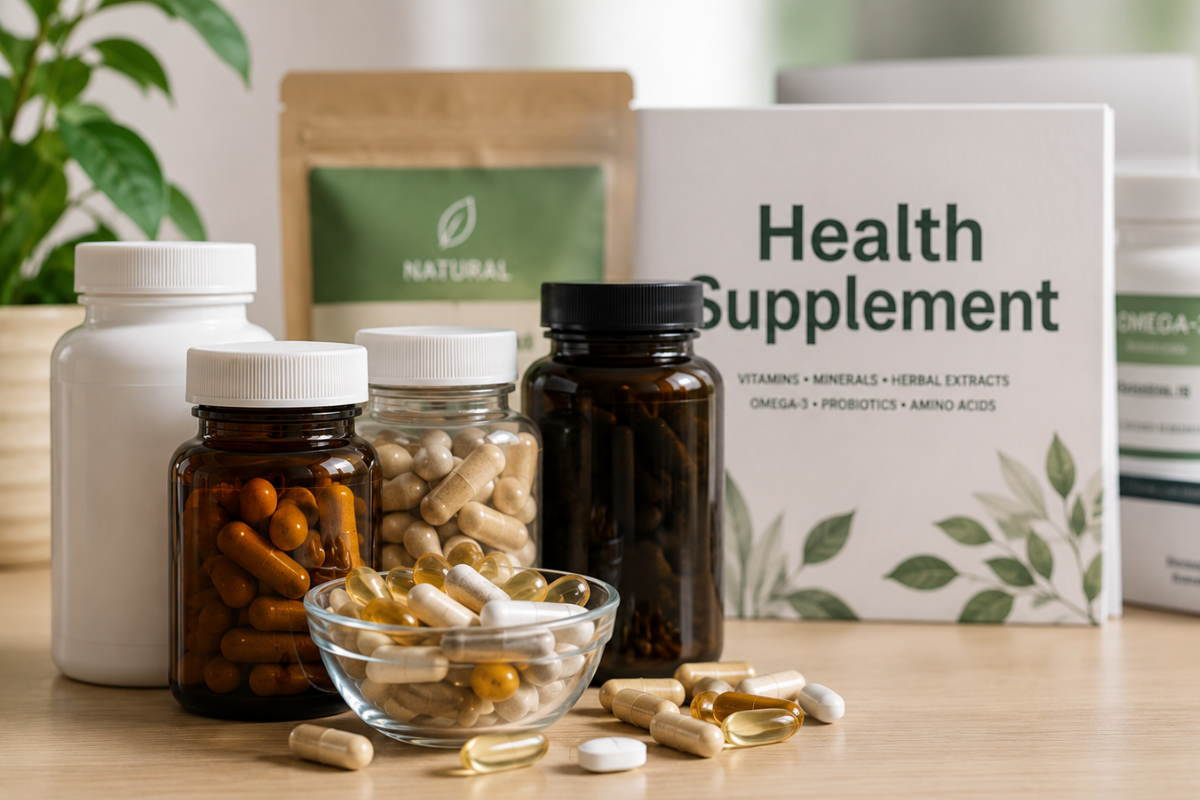
Illustrative image | AI-generated
This article provides general consumer health information and does not recommend or assess any particular supplement, brand or treatment. Supplements may not be suitable for everyone and may interact with medicines or medical conditions. Speak with a doctor or pharmacist if you are unsure whether a supplement is appropriate for you.
SINGAPORE — Walk through a pharmacy, supermarket or browse online and you will find vitamins, minerals, herbal products, probiotics and many other health supplements. A common question is whether these products have been “approved by HSA” before reaching consumers.
The answer may surprise some shoppers: health supplements generally do not require pre-market approval from Singapore’s Health Sciences Authority (HSA) before they can be sold locally.
According to HSA, health supplements are also not evaluated by the authority before sale in the same way that therapeutic medicines are.
A health supplement not being “HSA-approved” does not automatically mean that it is illegal or unsafe. Health supplements generally do not go through HSA’s pre-market approval process in the first place.
What Is Considered a Health Supplement?
HSA describes health supplements as products commonly taken to supplement the diet and support or maintain health.
They may contain ingredients such as:
- Vitamins
- Minerals
- Amino acids
- Glucosamine
- Ingredients derived from plant or animal sources
- Synthetic versions of naturally occurring ingredients
They are commonly supplied as tablets, capsules or liquids in measured doses.
Importantly, HSA distinguishes health supplements from medicines. Health supplements are not intended to prevent, treat, cure or alleviate symptoms of diseases or medical conditions.
So Do Health Supplements Need HSA Approval?
Generally, no.
HSA states that health supplements do not require approval and are not evaluated by HSA before they can be sold locally.
This is very different from therapeutic products, such as pharmaceutical medicines, which generally must be evaluated and approved by HSA before sale in Singapore.
If a bottle of vitamins or another health supplement does not say “HSA-approved”, that by itself does not mean something has gone wrong. Ordinary health supplements generally do not undergo that type of approval process.
No Pre-Market Approval Does Not Mean No Rules
Although HSA does not pre-approve ordinary health supplements, companies selling them still have responsibilities.
HSA says dealers — including manufacturers, importers, distributors and retailers — are responsible for the safety and quality of their health supplements.
Products must comply with applicable safety and quality requirements.
HSA also prohibits medicinal ingredients such as steroids from being added to health supplements and sets limits for toxic heavy metals.
Product labels and advertisements should not contain false or misleading claims, including inappropriate claims that a supplement can treat or prevent diseases.
“Not pre-approved” does not mean “not regulated”. Singapore uses safety and quality requirements together with post-market surveillance to oversee health supplements already being sold.
What Is HSA's Voluntary Notification System?
This is where many consumers become confused.
HSA operates a Voluntary Notification System for complementary health products, including health supplements.
A company responsible for placing an eligible complementary health product on the Singapore market may voluntarily notify HSA of the product.
Before submitting a notification, the company should assess the supporting information for the product to ensure that it meets the relevant safety, quality and labelling standards.
HSA then maintains a published list of complementary health products that have been voluntarily notified.
HSA explicitly states that inclusion in its notified-product database should not be interpreted as HSA endorsement of the product.
What Does “HSA-Notified” Actually Tell You?
A product on HSA's notified complementary health products list has been voluntarily notified by the company responsible for placing it on the market.
HSA says the notification is based on companies' declarations and self-assessment that the product complies with the relevant complementary health product guidelines.
However, consumers should understand what notification does — and does not — mean.
| Term | What It Means | What It Does Not Mean |
|---|---|---|
| HSA-approved | Relevant to regulated products that require HSA evaluation and approval, such as therapeutic products. | It is not the normal pre-market pathway for ordinary health supplements. |
| HSA-notified | The company has voluntarily notified HSA of an eligible complementary health product. | It does not mean HSA endorses the product or guarantees its effectiveness. |
| Not on the notified list | The product may simply not have been submitted through the voluntary notification system. | Its absence alone does not prove that the product is illegal or unsafe. |
What If a Supplement Is Not on HSA's Notified List?
This is an important question because HSA's notification system is voluntary.
A company is not automatically required to place every ordinary health supplement on the notified complementary health products list before the product can be sold.
That means consumers should not automatically conclude that an unnotified product is illegal or unsafe simply because its name does not appear on the voluntary list.
At the same time, the absence of pre-market approval or voluntary notification should not be interpreted as proof that a product is effective or suitable for everyone.
What About Supplements That Have Been Sold for Years?
Some health supplements may have been available in Singapore or other markets for many years without ever being described as “HSA-approved”.
That alone is not unusual because ordinary health supplements generally do not require HSA pre-market approval.
However, the length of time that a product has been sold should also not be treated as scientific proof that the supplement works for a particular medical condition or is suitable for every individual.
“Not HSA-approved” does not automatically mean unsafe. But “sold for many years” also does not automatically mean clinically proven or appropriate for everyone.
Can a Supplement Company Say Its Product Is “HSA-Approved”?
Consumers should be cautious when they see marketing language suggesting that an ordinary health supplement is “HSA-approved”.
Because health supplements generally do not undergo HSA's pre-market approval process, that phrase can create the wrong impression about how the product has been regulated.
Similarly, consumers should not assume that a product appearing on HSA's voluntary notification list has been endorsed by the authority.
How Does HSA Monitor Supplements After They Are Sold?
HSA's oversight does not end simply because health supplements are not evaluated before sale.
The authority conducts post-market surveillance to monitor product safety.
This can include:
- Sampling products available on the market
- Monitoring reports of adverse reactions
- Identifying potentially harmful ingredients or contaminants
- Initiating product recalls where necessary
- Alerting the public when harmful products are detected
HSA says it can take action when safety or quality concerns are detected in health supplements marketed locally.
What Should Consumers Check Before Buying?
Rather than relying only on the phrase “HSA-approved”, consumers can take several practical steps when considering a health supplement.
- Check who manufactures, imports or sells the product.
- Buy from established and reputable retailers.
- Read the ingredient list and dosage instructions.
- Be cautious when ingredients or quantities are unclear.
- Be sceptical of dramatic or unrealistic health claims.
- Check HSA's safety alerts when you have concerns about a product.
- Check HSA's List of Notified Complementary Health Products if you want to see whether a product has been voluntarily notified.
Products claiming to cure diseases, produce extremely rapid results or replace prescribed medical treatment deserve particular caution. Health supplements should not be marketed as treatments or cures for diseases.
How Can You Check HSA's Official List?
Consumers can visit the official Health Sciences Authority website at hsa.gov.sg.
Look for HSA's List of Notified Complementary Health Products.
The published list allows consumers to check products that companies have voluntarily notified to HSA.
As of August 2026, HSA states that more products will continue to be added over time.
For regulatory information about supplements sold in Singapore, use HSA's official website rather than relying solely on social-media posts, seller claims or forwarded messages.
What If You Take Prescription Medicines?
Even widely available supplements may not be appropriate for every person.
Some supplement ingredients can interact with medicines, while others may be unsuitable for people with particular medical conditions.
This is especially important if you:
- Take prescription medicines regularly
- Have a chronic health condition
- Are pregnant or breastfeeding
- Are preparing for surgery
- Take several supplements at the same time
A doctor or pharmacist can help you assess whether a supplement may interfere with your medication or health condition.
What If a Supplement Makes You Feel Unwell?
Do not assume that a product is harmless simply because it is described as “natural”.
HSA advises consumers who suspect that a health supplement is making them unwell or causing side effects to consult a doctor and bring the product along.
The packaging and ingredient information may help healthcare professionals understand what was taken.
So What Should Singapore Consumers Remember?
The most important point is that health supplements and medicines do not follow the same regulatory pathway.
Ordinary health supplements generally do not need HSA's pre-market approval before being sold in Singapore.
That does not automatically make them unsafe or illegal.
But it also does not mean every supplement has been independently proven to work.
Consumers should look beyond marketing language, understand what they are taking, check reliable sources and seek professional advice when necessary.
“Not HSA-approved” and “unsafe” are not the same thing. But “available for sale” and “proven effective” are not the same thing either. Understanding the difference can help consumers make better-informed choices.
Key Takeaways
- Health supplements generally do not require HSA approval before they can be sold in Singapore.
- HSA does not evaluate ordinary health supplements before sale in the same way it evaluates therapeutic medicines.
- Dealers remain responsible for ensuring supplements meet applicable safety and quality requirements.
- HSA operates a Voluntary Notification System for complementary health products.
- A product being HSA-notified does not mean that HSA approves, recommends or endorses it.
- A product not appearing on the voluntary list does not automatically mean it is illegal or unsafe.
- Consumers should be cautious of exaggerated claims and should check reliable sources before buying.
- People taking medication or managing health conditions should consider speaking with a doctor or pharmacist before using supplements.
Sources & References
- Health Sciences Authority (Singapore). How health supplements are regulated by HSA. Read HSA guidance
- Health Sciences Authority (Singapore). Health supplements. View HSA health supplement information
- Health Sciences Authority (Singapore). Voluntary Notification of Complementary Health Products. Read about voluntary notification
- Health Sciences Authority (Singapore). List of Notified Complementary Health Products. Check the official notified-product list
- Health Sciences Authority (Singapore). How therapeutic products are regulated by HSA. Read about therapeutic product regulation
About KnowvaLife
KnowvaLife uses timely health developments to help readers understand what they may mean for everyday wellbeing. We explain health information in clear language and use reliable sources to help readers make more informed health and lifestyle decisions.