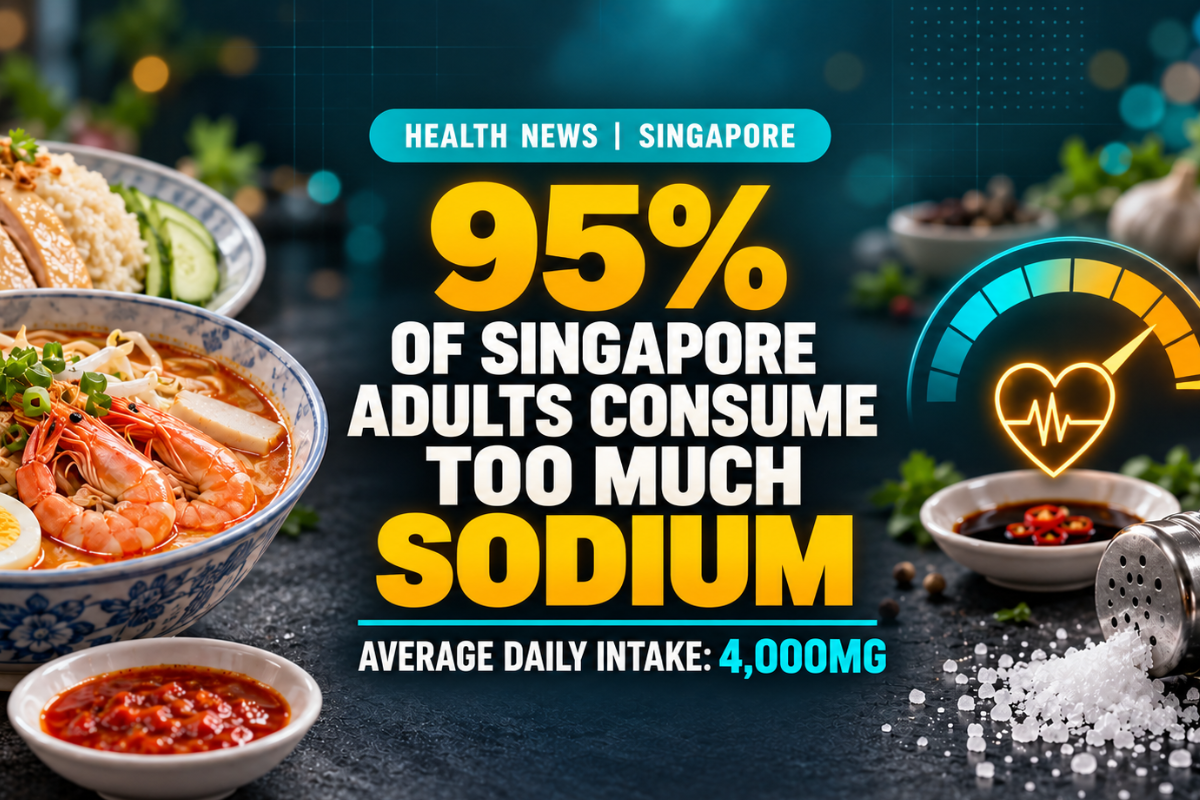
95% of Singapore Adults Consume Too Much Sodium
Singapore’s latest nutrition survey found average daily sodium intake has risen to 4,000mg—about twice the recommended daily limit.
Illustrative image | KnowvaLife
This article provides general health information and does not replace advice from a qualified healthcare professional. Sodium needs and dietary advice can differ for people with kidney disease, heart failure, high blood pressure or other medical conditions. Speak with a doctor or dietitian before making major dietary changes.
HEALTH NEWS — Nearly all Singapore residents are consuming more sodium than recommended. Findings from the Health Promotion Board’s National Nutrition Survey (NNS) 2025 show that 95% exceeded the daily recommended sodium limit of 2,000mg.
The Ministry of Health (MOH) and HPB released the latest national survey findings on 3 October 2026. Average daily sodium intake rose to 4,000mg in 2025, up from 3,480mg in 2019. The share of residents exceeding the recommended limit also increased from 88% in 2019 to 95% in 2025.
The 2,000mg daily limit is about one teaspoon of salt. The average Singapore resident consumed about 4,000mg of sodium a day in 2025—roughly twice that recommended limit.
Why Is Excess Sodium a Health Concern?
Sodium is an essential mineral, but too much can cause the body to retain more fluid and can raise blood pressure. Persistently high blood pressure increases the risk of heart disease, stroke and other cardiovascular complications.
High sodium intake is especially easy to miss because much of it comes from salt, sauces and seasonings added during cooking or food preparation—not only from the salt shaker at home.
Salt contains sodium, while nutrition labels usually list sodium in milligrams. Check the sodium value on packaged-food labels and remember that sauces, stock, gravy and soup can add substantial amounts to a meal.
Where Is Most of the Sodium Coming From?
MOH and HPB found that eating out more often is associated with higher calorie, saturated-fat and sodium intake. In 2025, seven in ten residents ate out at least once a day, compared with six in ten in 2019, and residents ate out about nine times a week.
Salt, sauces and seasonings in cooked dishes remain the largest contributor among residents with the highest sodium intakes.
People who eat out two or more times a day generally have higher sodium intake than those eating out six times or fewer each week.
Processed foods such as instant noodles account for about 15% of total sodium intake among residents with the highest intakes.
HPB’s analysis found commonly eaten local dishes had about 10% more sodium on average in 2025 than in 2023.
What Can You Do When Eating Out?
Small changes can reduce sodium without giving up the foods you enjoy. MOH has encouraged residents to ask for less salt and less soy sauce where possible, while HPB is working with hawkers, coffee shops, food courts and other food operators to increase lower-sodium choices.
- Ask for less salt, soy sauce, sauce or gravy when ordering.
- Do not automatically finish all the soup or gravy.
- Choose dishes with vegetables, fresh ingredients and less processed meat.
- Compare sodium levels on packaged-food labels before buying.
- Use herbs, garlic, ginger, chilli, lime or vinegar to add flavour with less salt.
“Less salt, less sauce, less gravy.” Requesting it clearly at the point of ordering can help make a lower-sodium meal the easier choice.
Is Lower-Sodium Salt an Option?
Lower-sodium salt usually replaces part of the sodium chloride in table salt with potassium chloride. HealthHub notes that potassium salt can help reduce sodium intake, but it is not suitable for everyone.
People with kidney disease or those taking medicines that affect potassium should ask a doctor or pharmacist before switching to potassium-based salt substitutes. “Lower sodium” does not mean unlimited use.
What Is Singapore Changing?
MOH says mandatory Nutri-Grade labelling and advertising restrictions will be extended beyond beverages to key sources of sodium and saturated fat, including pre-packed salt, sauces, seasonings, instant noodles and cooking oil, by 2028.
Products will be graded from A to D using category-specific thresholds. Products graded C or D will need a front-of-pack Nutri-Grade mark, while advertising for products graded D will be restricted. The measures are intended to help consumers compare products and encourage industry reformulation.
How Can You Track Your Intake?
HPB’s Healthy 365 app includes a meal-logging feature that can help users check the calorie, sugar and sodium content of foods and compare intake with personalised daily limits. For people with high blood pressure or other health conditions, a clinician can help set practical dietary goals.
Cutting sodium does not require removing every salty food immediately. Taste preferences can adapt gradually. Start with one meal, reduce the added sauces and seasonings, and repeat the habit consistently.
What Is Confirmed—and What Is Personal Advice?
The 95% figure, the 4,000mg average and the rise from 2019 are findings from Singapore’s NNS 2025. They describe population-level intake and do not diagnose an individual’s blood pressure or health risk.
Your own needs may differ because of age, medical conditions, medicines, activity level and other dietary factors. If you have been advised to follow a specific sodium or fluid restriction, follow your healthcare professional’s plan rather than relying on a general target.
Singapore’s latest data is a reminder that being physically active does not cancel out a high-sodium diet. Start with the habits that are easiest to repeat: request less salt and sauce, leave excess soup or gravy, compare labels and ask a healthcare professional for personalised advice when needed.
Key Takeaways
- 95% of Singapore residents exceeded the recommended daily sodium limit in the 2025 national nutrition survey.
- Average daily sodium intake rose to 4,000mg, compared with the recommended limit of 2,000mg.
- Salt, sauces and seasonings in cooked dishes are major contributors to sodium intake.
- Eating out more often is associated with higher sodium, calorie and saturated-fat intake.
- Ask for less salt, soy sauce, sauce and gravy when ordering, and avoid automatically finishing soup.
- Lower-sodium or potassium salt may not be suitable for people with kidney disease or certain medicines.
- Singapore plans to extend Nutri-Grade measures to key sodium and saturated-fat sources by 2028.
- Population statistics do not replace personalised advice from a healthcare professional.
Sources & References
- Singapore Ministry of Health. National Health Surveys Show Singaporeans Are Embracing Healthier Lifestyles, With a Need to Improve Our Diet Quality. Published 3 October 2026.
- Singapore Ministry of Health. Speech at the National Heart Week – World Heart Day Event. Delivered 3 October 2026.
- Singapore Ministry of Health. Nutri-Grade Requirements for Key Sources of Sodium and Saturated Fat Intake. Published 6 April 2025; implementation details updated by MOH’s latest 2026 survey release.
- Health Promotion Board Singapore. Want to lower your sodium intake? Try lower-sodium salt. Accessed October 2026.
- World Health Organization. Salt reduction. Accessed October 2026.
About KnowvaLife
KnowvaLife explains health news and everyday health topics in simple, easy-to-understand language. We use reliable health sources to help readers understand important developments and make more informed health decisions.