
Air Pollution and Your Health: What It Can Do Beyond Your Lungs
Air pollution is often thought of as a lung problem, but the effects can extend further. Fine particles and other pollutants can aggravate breathing conditions and are also linked with cardiovascular disease, stroke and other long-term health risks.
This article provides general educational information and does not replace personalised medical advice. People with asthma, chronic lung disease, heart disease or other medical conditions should follow healthcare guidance during periods of poor air quality.
In This Article
Introduction
You cannot always see the pollutants you breathe.
Air pollution can contain gases and particles produced by vehicles, industry, fires, smoke and other sources.
Some particles are extremely small and can travel deep into the respiratory system.
This is why the health effects of poor air quality are not limited to coughing or irritated eyes.
WHO identifies air pollution as an important environmental health risk linked with respiratory disease as well as heart disease, stroke and some cancers.
What Is Air Pollution?
Air pollution refers to harmful substances present in indoor or outdoor air.
WHO lists pollutants of major public-health concern including particulate matter, nitrogen dioxide, ozone, sulfur dioxide and carbon monoxide.
Outdoor sources can include motor vehicles, industrial facilities, power generation and forest fires.
Indoor air can also become polluted by tobacco smoke, combustion, poorly ventilated cooking and other sources.
The type and concentration of pollutants vary according to location, weather and environmental conditions.
Air pollution is not only visible smoke or haze. Some harmful pollutants are too small to see, which is why official air-quality information can be useful.
Why Fine Particles Matter
Particulate matter is a mixture of tiny solid particles and liquid droplets suspended in air.
The smaller particles are particularly important because they can be inhaled more deeply into the lungs.
PM2.5 refers to fine particulate matter with a diameter of 2.5 micrometres or less.
These particles are small enough to penetrate deep into the respiratory tract and are strongly associated with adverse health effects.
WHO identifies particulate matter as one of the pollutants responsible for a substantial share of air-pollution-related illness and premature death worldwide.
When haze or air-quality advisories mention PM2.5, they are referring to very fine particles that can reach deep into the lungs.
How Air Pollution Affects the Lungs
The respiratory system is one of the most obvious places where air pollution can cause problems.
Short-term exposure to high levels of particulate matter can irritate the airways, worsen coughing and aggravate conditions such as asthma.
WHO notes that particulate pollution can contribute to reduced lung function and respiratory infections and can aggravate asthma.
HealthHub likewise advises that haze can cause symptoms such as coughing, throat irritation and breathing discomfort, particularly in susceptible individuals.
Long-term exposure is associated with chronic respiratory diseases including chronic obstructive pulmonary disease.
People with asthma or chronic lung disease may experience worsening symptoms during periods of poor air quality. Follow your prescribed treatment plan and seek medical advice if symptoms are not controlled.
The Effects Can Reach the Heart
Air pollution is not only a respiratory issue.
WHO identifies air pollution as an important environmental risk factor for cardiovascular disease.
Fine particulate pollution has been associated with heart disease and stroke, particularly with repeated or long-term exposure.
Singapore research has also linked short-term increases in fine particulate air pollution with cardiac arrests in the population.
SingHealth has highlighted evidence showing a relationship between air pollution exposure and blood pressure as well.
These findings help explain why people with existing cardiovascular disease are often considered more vulnerable during significant haze or pollution episodes.
If you have heart disease or high blood pressure, air-quality advisories can be relevant to you even if you do not have a lung condition.
Who May Be More Vulnerable?
Air pollution affects everyone, but health effects may be more noticeable or serious in some groups.
HealthHub identifies people with chronic heart or lung disease as particularly vulnerable during haze episodes.
Children may also be more sensitive because their respiratory systems are still developing and they often spend time being physically active outdoors.
Older adults may have underlying heart, lung or other health conditions that increase susceptibility.
Pregnant women and people who spend substantial time outdoors may also need to pay closer attention to air-quality conditions.
Children, older adults and people with existing heart or lung disease should take air-quality advisories seriously and adjust outdoor activity when recommended.
Short-Term vs Long-Term Exposure
A single period of poor air quality and years of repeated pollution exposure are not the same.
Short-term exposure can worsen symptoms in susceptible people, including coughing, breathlessness and asthma symptoms.
HealthHub notes that health effects from haze exposure may sometimes appear after a delay rather than immediately.
Long-term exposure to fine particulate matter is associated with diseases that develop over a longer period.
WHO lists stroke, ischaemic heart disease, COPD and lung cancer among important long-term health outcomes linked with outdoor air pollution.
The risk depends on both the level of pollution and how much exposure accumulates over time.
Can Air Pollution Contribute to Lung Cancer?
Yes. Long-term exposure to outdoor air pollution has been linked with lung cancer.
WHO includes lung cancer among the major causes of premature death associated with ambient air pollution.
SingHealth also identifies air pollution, particularly exposure to very small PM2.5 particles, as one modifiable risk factor associated with lung cancer, including among some people who have never smoked.
Smoking remains a major lung-cancer risk factor, but it is not the only environmental exposure that matters.
Reducing Exposure on Poor Air Days
You cannot completely control outdoor air pollution, but you can reduce unnecessary exposure when air quality becomes poor.
Follow official air-quality and haze advisories and adjust strenuous outdoor activity according to the recommended guidance.
HealthHub advises vulnerable individuals to reduce prolonged or strenuous outdoor physical exertion when pollution levels are elevated.
When possible, exercise away from heavily trafficked roads, particularly when pollution levels are high.
Keep doors and windows closed during severe haze when appropriate and use air-conditioning or suitable filtration where available.
Avoid adding unnecessary indoor pollutants such as cigarette smoke.
You do not necessarily have to stop all movement on a poor-air day. Consider moving your workout indoors when outdoor air quality is unsuitable.
Does Wearing a Mask Help?
Not every mask provides the same protection against fine particulate matter.
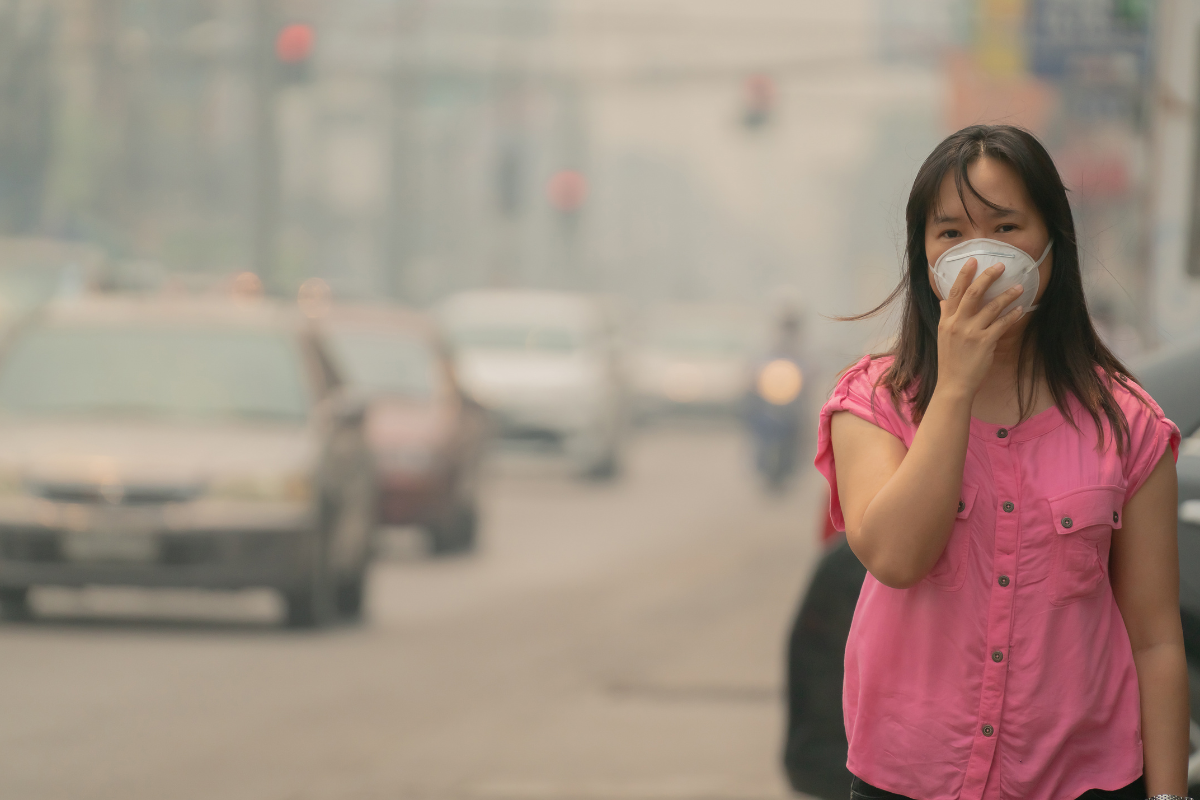
During significant haze, properly fitted particulate respirators may reduce inhalation of fine particles better than loose-fitting surgical masks.
However, respirators can make breathing more difficult for some people and need to fit correctly to work effectively.
People with significant heart or lung disease should follow official health advice about whether such masks are appropriate for them.
Reducing time spent in polluted outdoor environments remains important rather than relying entirely on a mask.
When Symptoms Need Medical Attention
Mild irritation may improve when exposure decreases, but persistent or significant symptoms deserve medical attention.
Seek advice if you develop worsening breathlessness, persistent coughing, wheezing or chest discomfort.
People with asthma should follow their asthma action or treatment plan and seek medical review when symptoms remain poorly controlled despite prescribed treatment.
Chest pain, severe breathing difficulty, fainting or other serious symptoms require urgent medical assessment.
Severe breathlessness, significant chest pain, fainting or rapidly worsening symptoms should not simply be blamed on haze or air pollution. Seek urgent medical assessment.
Key Takeaways
- Air pollution contains gases and particles that can affect human health.
- Fine particulate matter such as PM2.5 can travel deep into the lungs.
- Short-term pollution exposure can aggravate asthma and cause respiratory symptoms.
- Air pollution can affect more than the lungs and is linked with cardiovascular disease and stroke.
- Long-term exposure is associated with COPD, lung cancer and other chronic diseases.
- Children, older adults and people with existing heart or lung disease may be more vulnerable.
- Official air-quality advisories can help people decide when to reduce outdoor exposure.
- Moving strenuous exercise indoors can be useful during periods of poor air quality.
- Avoiding tobacco smoke helps reduce additional indoor air pollution.
- Severe breathing difficulty or chest pain requires urgent medical attention.
Sources & References
- Health Promotion Board, Singapore — HealthHub. How to Protect Yourself Against the Haze. HealthHub Singapore
- SingHealth. Polluting Particles in the Air Are Linked to Cardiac Arrests. SingHealth
- SingHealth. New Directions in Management of High Blood Pressure. SingHealth
- SingHealth. Lung Cancer — Causes, Symptoms & Treatments. SingHealth
- World Health Organization. Ambient (Outdoor) Air Pollution. World Health Organization
- World Health Organization. Health Impacts of Air Pollution. World Health Organization
About KnowvaLife
KnowvaLife creates practical health and wellness content designed to make everyday health information easier to understand. Our content is educational and does not replace personalised advice from qualified healthcare professionals.