Indonesia Wildfires May Last Until Early November, Minister Says
Indonesia is facing its worst wildfire season in 11 years, with officials warning that fires could continue until early November as delayed rains and severe dry conditions prolong the crisis.
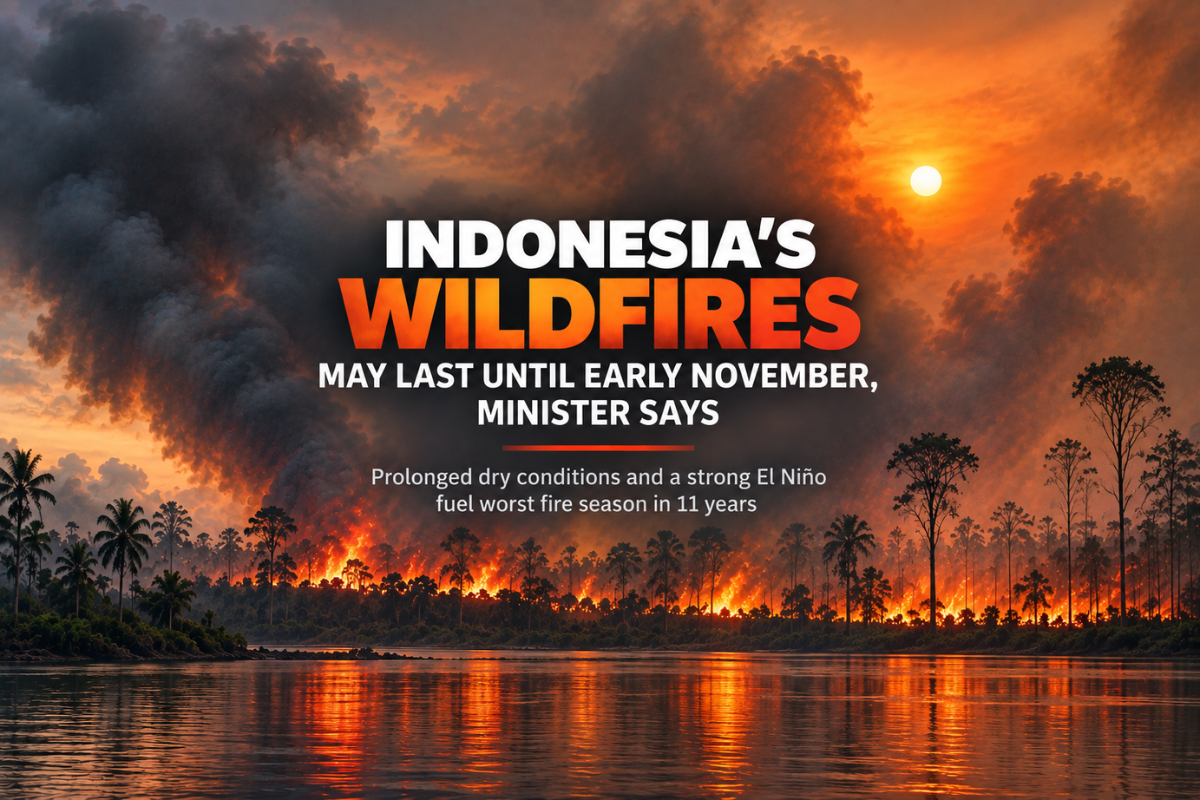
Illustrative image | AI-generated
This article provides general health information and does not replace medical advice. People with asthma, chronic lung disease, heart disease or other medical conditions should follow advice from their healthcare professional. Seek urgent medical attention for severe breathing difficulty, chest pain, confusion or fainting.
HEALTH NEWS — Indonesia’s wildfires could continue until early November as the country battles its most severe fire season in 11 years.
Forestry Minister Raja Juli Antoni said on September 16 that the rainy season was expected to arrive later than previously forecast, allowing dry conditions and fires to persist for longer.
The fires have been particularly severe across parts of Borneo and Sumatra, while smoke from the crisis has also contributed to haze and deteriorating air quality beyond Indonesia’s borders.
Indonesia is experiencing its worst wildfire season in 11 years. Authorities are warning that fires may continue until early November because rainfall is expected to arrive later than usual.
Why Could the Fires Continue Until November?
Indonesia has experienced prolonged drought and exceptionally dry conditions that have left vegetation and peatlands vulnerable to fire.
The current fire season has also been associated with strong “super El Niño” conditions, which have contributed to high temperatures and reduced rainfall.
When peatlands become extremely dry, fires can be particularly difficult to extinguish because burning may continue beneath the surface.
Prolonged dry weather has increased the risk of vegetation and peatland fires.
Hotter and drier conditions have contributed to a more severe fire season.
Dry peat can burn beneath the surface and may be difficult to fully extinguish.
The rainy season is expected to arrive later, potentially allowing fires to continue.
Respiratory Illnesses Rise in Affected Provinces
The wildfire emergency is increasingly becoming a public-health issue for communities exposed to heavy smoke.
According to government data cited by Reuters, respiratory illness cases across seven affected Indonesian provinces more than doubled from 50,891 to 113,336 between September 1 and September 9.
More than 12.5 million people across the seven provinces were reported to have been exposed to haze, with West Kalimantan among the areas heavily affected.
Fine particles in wildfire smoke can travel deep into the lungs. Exposure may cause eye and throat irritation, coughing, wheezing and shortness of breath, and can aggravate existing heart and respiratory conditions.
Why Is Wildfire Smoke a Health Concern?
Wildfire smoke contains a complex mixture of gases and particles. One of the biggest health concerns is PM2.5 — fine particulate matter small enough to penetrate deep into the respiratory system.
The World Health Organization says wildfire smoke can cause sudden deterioration in air quality and can affect communities far beyond the location of the fire.
Short-term exposure may cause headaches, irritation of the eyes and respiratory tract, coughing, wheezing and shortness of breath.
People with asthma, chronic lung disease or cardiovascular disease may experience worsening symptoms during periods of heavy smoke.
Who May Be More Vulnerable?
People who may be more sensitive to wildfire smoke include:
- Babies and children
- Older adults
- Pregnant women
- People with asthma
- People with chronic lung disease
- People with heart disease
- Outdoor workers
- People exposed to smoke for long periods
People with existing heart or lung conditions should keep prescribed medication available and follow advice from their healthcare professional.
Could the Smoke Affect Other Countries?
Yes. Wildfire smoke does not remain within national borders. Depending on wind direction and weather conditions, smoke can travel hundreds or even thousands of kilometres.
The current Indonesian fires have already contributed to transboundary haze affecting neighbouring Singapore and Malaysia.
However, this does not mean either country will experience unhealthy haze continuously until November. Air quality can improve or deteriorate depending on wind direction, rainfall, fire activity and other atmospheric conditions.
The warning that Indonesia’s fires could continue until early November refers to the potential duration of the wildfire season. It does not mean Singapore, Malaysia or other neighbouring countries will experience continuous haze throughout that period.
Indonesia Steps Up Firefighting Efforts
Indonesia has intensified efforts to contain the fires, including aerial water bombing and cloud-seeding operations.
More than 50 aircraft have been deployed as part of firefighting operations, according to Reuters.
Japan has also provided three CH-47 Chinook helicopters to assist, while regional cooperation remains important as smoke and haze can cross national borders.
How Can You Reduce Exposure to Wildfire Smoke?
The most important step during periods of poor air quality is to reduce exposure to smoke and follow advice issued by local authorities.
- Monitor official air-quality readings and health advisories.
- Reduce unnecessary outdoor activity when smoke pollution is high.
- Keep windows and doors closed during heavy smoke where appropriate.
- Protect indoor air from outdoor smoke where possible.
- Use air-conditioning in recirculation mode when appropriate.
- Seek cleaner indoor air spaces if your home is heavily affected.
- Keep prescribed asthma, lung or heart medication accessible.
- Avoid smoking and other sources of indoor air pollution.
Reducing exposure is the first priority during heavy wildfire smoke. Check official air-quality information rather than relying only on how clear or hazy the sky appears.
Should You Wear a Mask?
A well-fitting respirator such as an N95 can help reduce exposure to fine airborne particles when smoke pollution is high and you need to be outdoors.
Ordinary surgical masks are not designed to provide the same level of filtration against fine particles associated with wildfire smoke.
Mask recommendations can vary according to local air-quality conditions and individual health circumstances, so follow advice from health authorities where you live.
When Should You Seek Medical Care?
Move away from smoky air and seek medical advice if you develop persistent or worsening symptoms such as:
- Persistent coughing
- Wheezing
- Shortness of breath
- Chest discomfort
- Dizziness
- Asthma symptoms that are not controlled by usual medication
- Symptoms that continue after moving to cleaner air
Severe breathing difficulty, significant chest pain, confusion, blue lips, fainting or collapse require urgent medical attention. Use the emergency medical number applicable to your location.
Key Takeaways
- Indonesia’s wildfires could continue until early November 2026.
- The country is experiencing its worst wildfire season in 11 years.
- Delayed rainfall and severe dry conditions are allowing fires to persist.
- Respiratory illness cases across seven affected provinces reached 113,336 between September 1 and 9, according to government data cited by Reuters.
- More than 12.5 million people across the seven provinces were reported exposed to haze.
- Wildfire smoke can travel across borders and affect air quality far from the fires.
- Children, older adults, pregnant women and people with heart or lung conditions may be more vulnerable.
- Reduce exposure and follow official air-quality and health advisories during heavy smoke.
- The possibility of fires continuing until November does not mean neighbouring countries will experience continuous haze until then.
Sources & References
- Reuters. Indonesia's wildfires may last until early November, minister says. Read Reuters report
- Reuters. Indonesia's choking wildfire, haze worsen breathing woes on Borneo. Read Reuters health report
- World Health Organization. Wildfires and health. WHO wildfire health guidance
- World Health Organization. Public health advice during wildfires: how to protect your health and keep safe. WHO public health advice
About KnowvaLife
KnowvaLife explains health news and everyday health topics in simple, easy-to-understand language. We use reliable health sources to help readers understand important developments and make more informed health decisions.