Singapore Air Quality Nears Unhealthy Range: What Haze Can Do to Your Health
Singapore's air quality moved close to the Unhealthy range on August 24, as regional hotspot and smoke haze activity increased. Here is what the PSI and PM2.5 readings mean, who may be more vulnerable and how to plan outdoor activities safely.
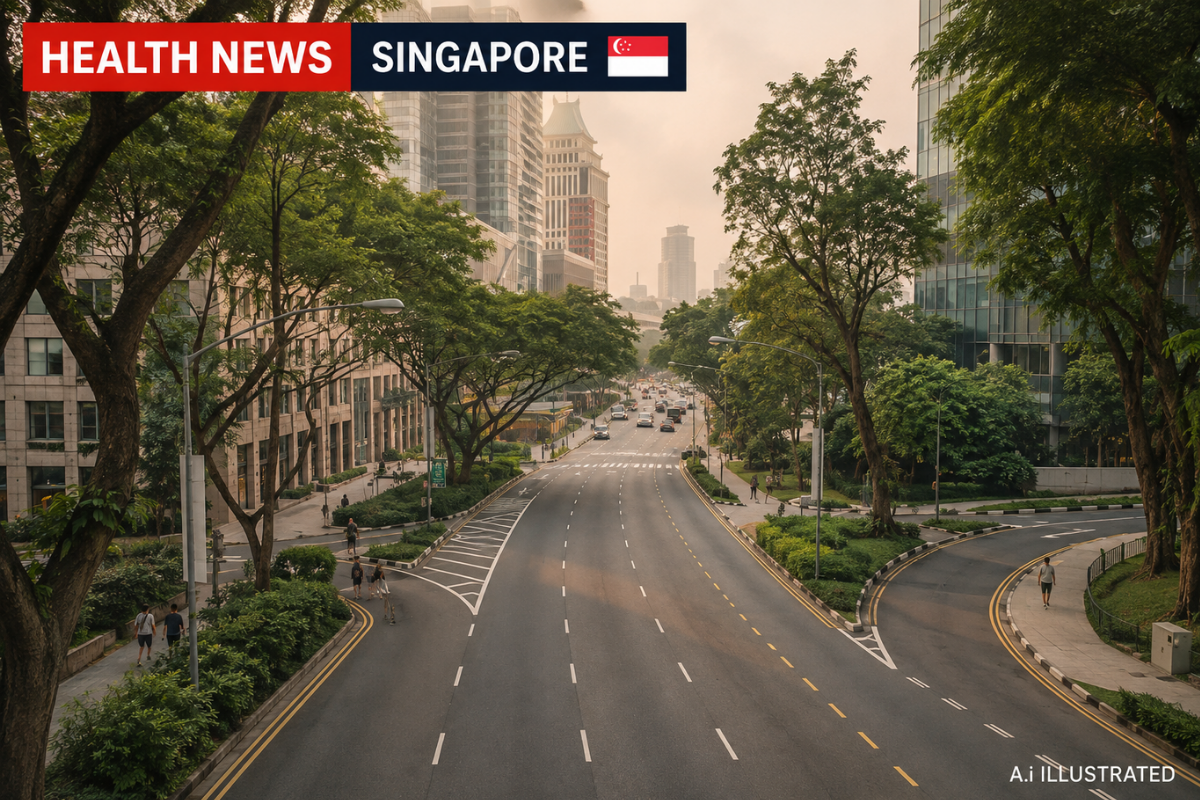
AI illustration
This article provides general health information and is not a substitute for individual medical advice. People's responses to haze and air pollution can differ depending on their health, exposure and level of physical activity. Seek medical advice if you feel unwell or if symptoms worsen.
SINGAPORE — Air quality came close to the Unhealthy range on August 24, 2026, as Singapore monitored an increase in regional hotspot and smoke haze activity.
The National Environment Agency (NEA) said hotspots and dense smoke plumes had been detected mainly in Kalimantan and southern Sumatra, with smoke also observed in parts of Riau.
With prevailing winds blowing from the south or south-east, NEA warned that Singapore could experience occasional periods of haze.
At 2pm, the 24-hour Pollutant Standards Index (PSI) in central Singapore reached 91. The reading continued rising during the evening and reached 98 at 9pm — still within the Moderate range, but just below the Unhealthy threshold of 101.
Singapore's 24-hour PSI remained within the Moderate range, but central Singapore came very close to the Unhealthy threshold. NEA said it was closely monitoring the situation and would provide further advisories if air quality worsened.
What Does the PSI Actually Mean?
The Pollutant Standards Index, or PSI, is one of the main ways Singapore communicates overall air quality.
The PSI is calculated using concentrations of several major air pollutants. During periods of transboundary haze, fine particulate matter known as PM2.5 is usually the pollutant of greatest health concern.
| 24-Hour PSI | Air Quality | General Meaning |
|---|---|---|
| 0–50 | Good | Normal activities can generally continue. |
| 51–100 | Moderate | Air quality remains within the Moderate range. |
| 101–200 | Unhealthy | People may need to adjust prolonged or strenuous outdoor activity depending on their health. |
| 201–300 | Very Unhealthy | Greater restrictions on outdoor activity are advised. |
| Above 300 | Hazardous | Outdoor exposure should be minimised or avoided according to health guidance. |
A 24-hour PSI reading of 101 or above is classified as Unhealthy. A reading of 98 is therefore close to the threshold, but it is still officially within the Moderate range.
What Is PM2.5 and Why Does It Matter?
PM2.5 refers to very small airborne particles measuring 2.5 micrometres or less in diameter.
These particles are small enough to travel deep into the respiratory system. During smoke-haze episodes, PM2.5 is the pollutant that people should pay particular attention to.
Short-term exposure may cause symptoms such as irritation of the eyes, nose or throat. Some people may also experience coughing or breathing discomfort.
People with existing heart or lung conditions may be more sensitive to worsening air pollution.
PSI or PM2.5 — Which Reading Should You Check?
Both are useful, but they serve different purposes.
NEA advises the public to use the 1-hour PM2.5 reading when deciding whether to carry out an activity in the immediate future.
For example, if you are considering a run, outdoor workout, long walk or another activity within the next hour, the latest 1-hour PM2.5 reading gives a more immediate picture of fine-particle pollution.
The 24-hour PSI, meanwhile, reflects air quality over a longer period and is used with health advisories when planning activities ahead.
Going outdoors soon? Check the 1-hour PM2.5 reading. Planning activities for later or the next day? Check the 24-hour PSI forecast and corresponding health advisory.
How Can Haze Affect Your Health?
The health effects of haze depend on several factors, including how polluted the air is, how long a person is exposed, the intensity of physical activity and an individual's existing health.
For otherwise healthy people, short-term haze exposure may cause relatively mild symptoms such as:
- Eye irritation
- Dry or irritated nose
- Sore or irritated throat
- Coughing
- General respiratory discomfort
Symptoms can become more important for people who already have chronic respiratory or cardiovascular conditions.
Who Should Be More Careful During Haze?
Singapore's haze health guidance pays particular attention to groups that may be more vulnerable to air pollution.
These include:
- Children
- Older adults
- Pregnant women
- People with chronic lung disease
- People with heart disease
People with asthma or other existing respiratory conditions should also make sure their usual medication is readily available and seek medical attention if symptoms worsen.
If haze exposure causes significant breathing difficulty, worsening asthma symptoms, chest discomfort or other concerning symptoms, reduce exposure and seek medical advice rather than relying only on the PSI number.
Do You Need to Stop Outdoor Activities Immediately?
Not necessarily.
When the 24-hour PSI is within the Good or Moderate range, Singapore's health guidance generally allows normal activities to continue.
When the PSI enters the Unhealthy range, advice becomes more cautious.
Healthy people are advised to reduce prolonged or strenuous outdoor physical exertion, while children, older adults and pregnant women should minimise prolonged or strenuous outdoor exertion.
People with chronic heart or lung disease are advised to avoid prolonged or strenuous outdoor physical exertion when the PSI is Unhealthy.
Does Everyone Need an N95 Mask?
No.
According to Singapore's Ministry of Health, an N95 mask is generally not required for ordinary short-term exposure such as commuting between home, school or work.
N95 masks are also generally not necessary indoors.
The need for an N95 becomes more relevant when air pollution is severe and a person must remain outdoors for prolonged periods.
Older people, pregnant women and people with serious heart or lung conditions should seek medical advice about mask use if prolonged outdoor exposure becomes necessary during severe haze.
The appropriate response depends on the actual air-quality reading, the length of exposure, your activity level and your health. Checking official readings is more useful than assuming everyone immediately needs an N95 mask.
What Can You Do If Air Quality Worsens?
If Singapore's air quality moves into higher PSI ranges, simple steps can reduce your exposure.
- Check the latest PSI and 1-hour PM2.5 readings before outdoor activities.
- Reduce prolonged or strenuous exercise when official guidance recommends it.
- Spend more time indoors when air pollution becomes significantly worse.
- Keep windows and doors closed when outdoor air quality is poor, where practical.
- Use an appropriate air purifier indoors if needed.
- Keep asthma, heart or other prescribed medicines readily available.
- Drink enough water and look after your general health.
- Seek medical care if you develop significant or worsening symptoms.
Where Should You Check Singapore's Air Quality?
Air-quality conditions can change throughout the day, so social-media screenshots or readings shared several hours earlier may no longer represent the current situation.
For the latest official information, Singapore residents can use:
- The NEA haze microsite at haze.gov.sg
- The myENV mobile app
- NEA's official website
The myENV app provides updated PSI and hourly PM2.5 information and can also provide environmental alerts.
Air quality can change with wind direction, rainfall and regional fire activity. A PSI figure from earlier in the day should not automatically be treated as the current reading.
Why Can Haze Conditions Change So Quickly?
Singapore's haze situation is influenced by conditions beyond the island itself.
Forest and land fires in parts of the surrounding region can generate smoke plumes. Whether that smoke reaches Singapore depends partly on wind direction and weather conditions.
On August 24, NEA reported increased hotspot and smoke-haze activity in parts of Kalimantan and southern Sumatra, with smoke also observed in Riau.
NEA said prevailing winds from the south or south-east could bring occasional periods of haze to Singapore.
That is why the situation can improve or deteriorate even when the regional fires themselves have not stopped.
What Should Singapore Residents Remember?
The main takeaway from the August 24 development is not that Singapore had already entered the Unhealthy range.
At 9pm, the reported 24-hour PSI had reached 98 — still within the Moderate range — but it had moved close enough to the threshold for air quality to warrant close monitoring.
The better approach is to understand the numbers, check current information and adjust activities if official health guidance changes.
Haze health advice is not simply about whether the sky looks smoky. Use Singapore's official PSI and PM2.5 readings, consider your own health and adjust your outdoor activity according to the latest advisory.
Key Takeaways
- Central Singapore's 24-hour PSI reached 91 at 2pm on August 24 and later climbed to 98 at 9pm.
- PSI 51–100 is classified as Moderate, while 101–200 is classified as Unhealthy.
- PM2.5 is the main pollutant of concern during smoke-haze episodes.
- Use the 1-hour PM2.5 reading when planning immediate outdoor activities.
- Children, older adults, pregnant women and people with chronic heart or lung disease may be more vulnerable to haze.
- N95 masks are generally not necessary for ordinary short-term exposure such as commuting.
- Check NEA's haze website or myENV for current air-quality information instead of relying on old screenshots or social-media posts.
Sources & References
- National Environment Agency (Singapore). Haze – Air Quality, Weather and Haze Outlook. View Singapore haze information
- National Environment Agency (Singapore). Managing Haze. Read NEA haze guidance
- Ministry of Health (Singapore). Haze – Health Advisory for the General Public. Read MOH health advice
- National Environment Agency (Singapore). myENV App. Learn about myENV
- Channel NewsAsia. Haze could return to Singapore as fires intensify in Sumatra, Kalimantan. Read the August 24 report
About KnowvaLife
KnowvaLife uses timely health developments to help readers understand what they may mean for everyday wellbeing. We explain health information in clear language and use reliable sources to help readers make more informed health and lifestyle decisions.