Why Muscle Strength Matters for Healthy Ageing
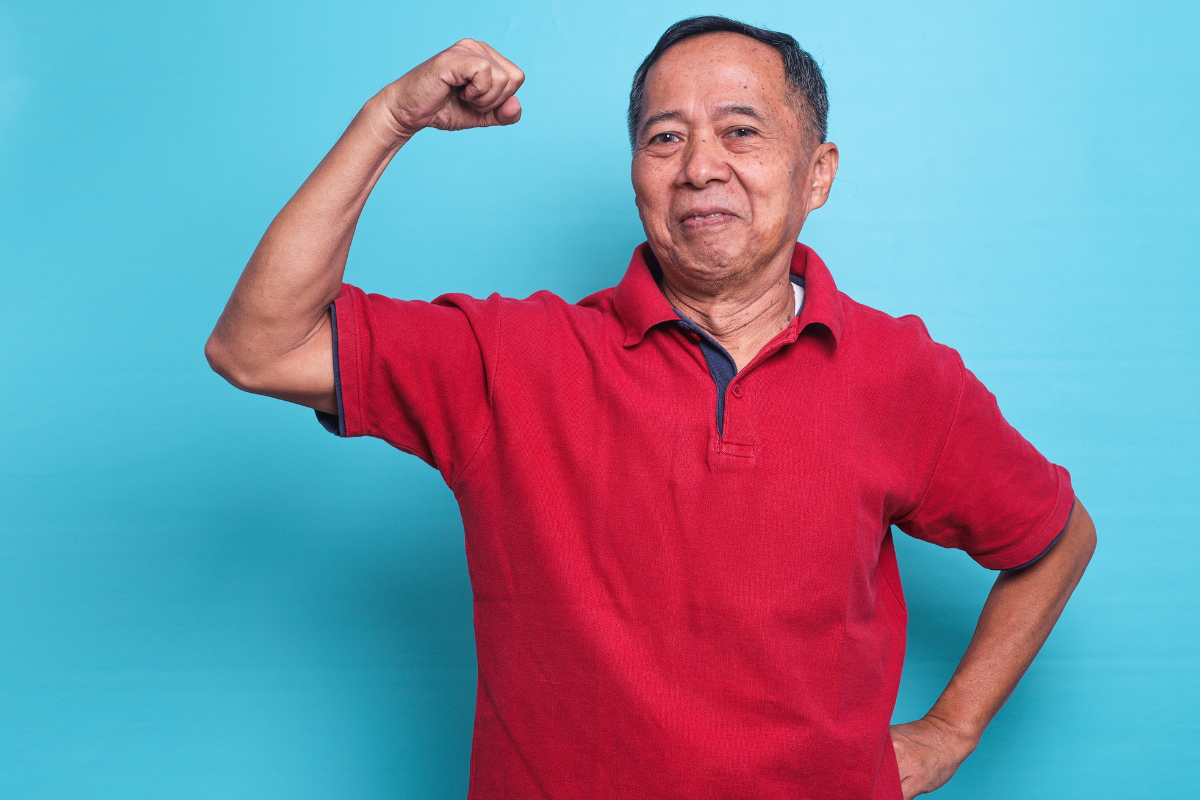
Muscle strength supports far more than exercise performance. It helps with balance, mobility, lifting, climbing stairs and staying physically independent as you get older.
This article provides general information about muscle strength and healthy ageing for educational purposes only. Exercise needs vary with age, health conditions, mobility and fitness level. Seek personalised advice from a qualified healthcare or exercise professional if needed.
In This Article
Introduction
Healthy ageing is often discussed in terms of blood pressure, cholesterol, weight and medical screening. Those things matter, but physical function matters too.
Muscle strength helps you do the ordinary things that make independent life possible: getting up from a chair, carrying shopping, climbing stairs, opening heavy doors and recovering your balance when you stumble.
As people age, muscle mass and strength can decline, especially when activity levels fall. This does not mean weakness is inevitable. Regular resistance exercise, enough physical activity and adequate nutrition can help preserve function.
Thinking about strength earlier in adulthood can make it easier to maintain it later. The goal is not bodybuilding — it is keeping enough physical capacity for daily life.
Muscle Strength Supports Everyday Life
Muscles generate force for almost every movement you make. Walking, lifting, pushing, pulling and standing all depend on coordinated muscle action.
When strength is adequate, routine tasks require a smaller percentage of your total capacity. Carrying a bag of groceries feels easier when your muscles are stronger because the task represents less of your maximum effort.
This reserve becomes more important with age. Having strength beyond the minimum needed for basic tasks can make daily activities feel safer and less exhausting.
Think of strength as a physical savings account. Building and maintaining it gives you more reserve for illness, injury, travel and the demands of everyday life.
Strength Naturally Changes With Age
Ageing is associated with changes in muscle mass, muscle quality and neuromuscular function. The rate of decline differs from person to person and is influenced by activity, nutrition, health and genetics.
Long periods of inactivity can accelerate loss of strength. This is why staying active across adulthood matters rather than waiting until function has already declined.
Older adults can still gain strength through appropriately designed resistance exercise. The body remains capable of adaptation well into later life.
The earlier you make strength training part of your routine, the easier it may be to preserve those abilities over time.
Strong Muscles Help Support Balance and Mobility
Balance is influenced by the inner ear, vision, nerves, joints and muscles. Strength in the legs and hips is particularly important for controlling movement and recovering from small losses of balance.
Strong lower-body muscles help with walking speed, stair climbing and rising from a chair. Core and upper-body strength also contribute to posture, carrying tasks and support during daily activities.
CDC guidance for older adults includes muscle-strengthening and balance activities as part of a weekly physical-activity routine.
Strength training should therefore be viewed as one component of fall-risk reduction and physical independence, not as a complete solution on its own.
Falls can have many causes, including medicines, vision problems, environmental hazards and medical conditions. Strength and balance exercises help, but broader assessment may be needed if falls are frequent.
Strength Training Can Help Preserve Function
Resistance exercise works by challenging muscles against some form of resistance. This can come from weights, resistance bands, machines or body-weight exercises.
CDC recommends muscle-strengthening activity on two or more days each week for adults, working the major muscle groups.
For older adults, exercises can be adapted to ability. Sit-to-stands, wall push-ups, resistance-band rows and supported step-ups are examples that can be modified as needed.
Progression matters. As a movement becomes easier, resistance or difficulty can gradually increase so the muscles continue adapting.
If you are new to resistance exercise, start with simple movements you can perform with control. Good technique matters more than lifting heavy loads.
Protein and Nutrition Still Matter
Exercise provides the stimulus for muscles to adapt, while nutrition provides the building blocks needed to maintain and repair tissue.
Protein is particularly important because it supplies amino acids used by muscle. Older adults may need to pay closer attention to getting enough protein across the day, especially when appetite decreases or total food intake becomes lower.
Good protein sources can include fish, eggs, poultry, tofu, tempeh, beans, lentils, dairy foods, nuts and seeds.
Protein should still be part of a balanced diet. Vegetables, fruit, whole grains and healthy fats remain important for overall health.
Strength Is Only One Part of Healthy Ageing
Muscle strength is important, but healthy ageing also depends on cardiovascular fitness, balance, mobility, nutrition, sleep, social connection and preventive healthcare.
Adults should continue to include aerobic activity such as walking, cycling or swimming. Older adults should also incorporate balance-focused activities where appropriate.
Strength training works best as part of a broader lifestyle rather than as a replacement for every other type of movement.
Health conditions also matter. Blood pressure, diabetes risk, bone health and medications can affect how exercise should be approached.
Start at a Level You Can Sustain
You do not need to begin with a complicated gym programme. Two short strength sessions each week can be a practical start.
Choose movements that cover the major muscle groups and suit your current ability. If needed, use support from a chair, wall or stable surface.
Increase the challenge slowly. Consistency matters far more than trying to become strong overnight.
If you have significant joint pain, recent surgery, heart or neurological conditions, osteoporosis or other health concerns, professional guidance can help you choose appropriate exercises.
Measure progress by function as well as weight lifted. Easier stairs, better balance and more confidence carrying everyday items are meaningful improvements.
Why Strength Matters Even If You Are Not an Athlete
You do not need sports goals to benefit from stronger muscles. Most of the benefits relate directly to daily life.
Being able to get up from the floor, lift luggage, carry grandchildren or walk confidently through an airport all require strength and physical reserve.
These abilities can contribute to independence and quality of life as you age.
It Is Never Too Late to Begin
People can improve strength at many ages. The starting point simply needs to match current ability and health.
Someone who has never trained may begin with body-weight movements and resistance bands. Someone already active may use heavier resistance and more structured programming.
The important thing is to begin safely, progress gradually and keep strength training as part of a long-term routine.
Key Takeaways
- Muscle strength supports everyday tasks and physical independence.
- Strength and muscle function can decline with age, especially with inactivity.
- Resistance exercise can help preserve and improve strength in later life.
- Adults should include muscle-strengthening activity on at least two days each week.
- Leg and hip strength support mobility and balance.
- Protein and overall nutrition support muscle maintenance.
- Healthy ageing also requires aerobic activity, balance, sleep and preventive healthcare.
- Start at an appropriate level and progress gradually.
Sources & References
About KnowvaLife
KnowvaLife creates practical health and wellness content designed to make everyday health information easier to understand. Our content is educational and does not replace personalised advice from qualified healthcare professionals.