Why Do Babies in Singapore Receive BCG at Birth—But Some Countries Don’t?
Parents often recognise the small BCG scar, but fewer know the 13-year story behind the vaccine, why Singapore began routinely vaccinating newborns in 1957, and why lower-TB countries may follow a different policy.
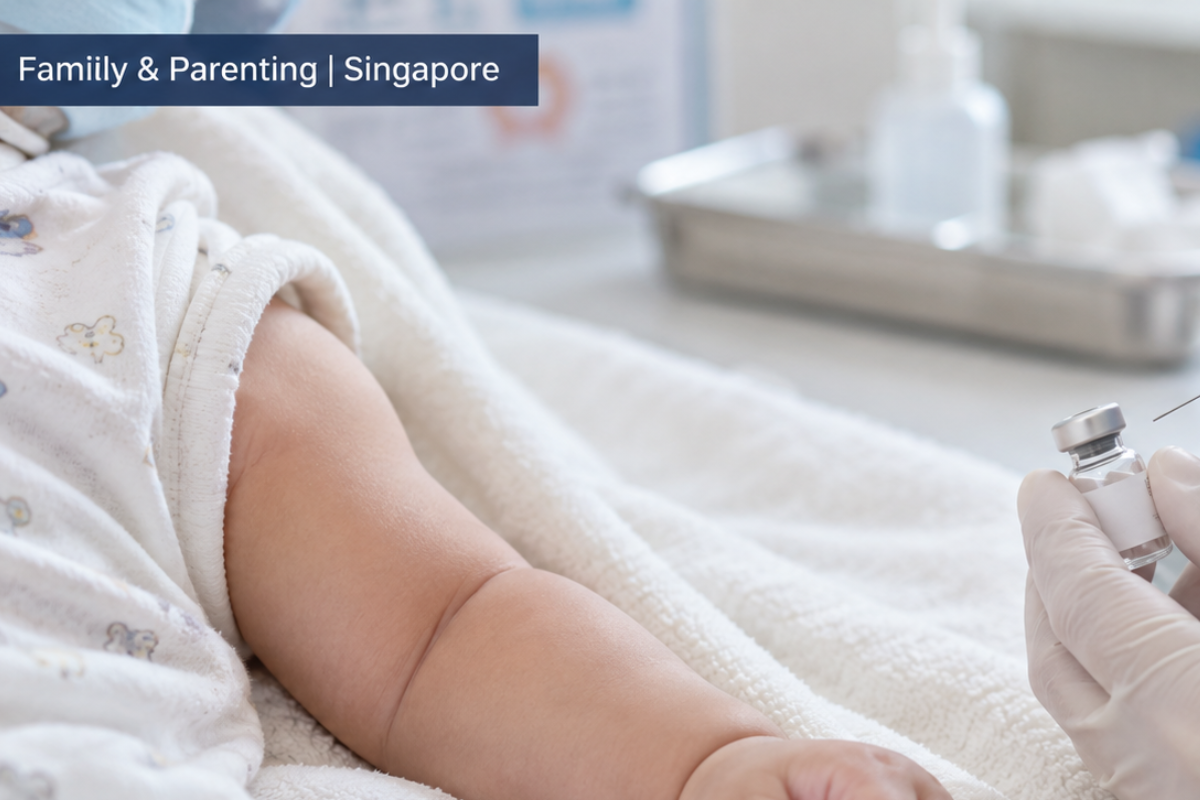
Illustrative image | AI-generated
This article provides general information and does not replace advice from your child’s healthcare professional. Vaccine suitability can depend on a baby’s health, immune system and medical treatment. Do not delay or avoid vaccination based only on online information.
FAMILY & PARENTING — In Singapore, the BCG vaccine is routinely offered to newborns soon after birth under the National Childhood Immunisation Schedule. Its main purpose is not to guarantee that a child will never encounter tuberculosis. It is especially valued for protecting young children against severe forms of TB, including TB meningitis and disseminated TB.
Singapore routinely vaccinates newborns because TB remains a public-health concern and babies can become seriously ill if infected. Countries with very low TB incidence may decide that universal newborn vaccination adds less benefit and instead vaccinate only babies with recognised exposure risks.
First, What Is Tuberculosis?
Tuberculosis, or TB, is an infectious disease caused by bacteria called Mycobacterium tuberculosis. It usually affects the lungs but can involve other parts of the body.
TB spreads through the air when a person with infectious TB disease in the lungs or throat coughs, speaks or sings. Infection does not always cause immediate illness; some people have latent TB infection without symptoms, while others develop active TB disease.
Babies and young children are particularly important to protect because they have a higher risk of developing serious disease after infection.
What Does “BCG” Mean?
BCG stands for Bacillus Calmette–Guérin, named after the two French scientists who developed it: physician and bacteriologist Albert Calmette and veterinarian Camille Guérin.
BCG is a live attenuated vaccine. It uses a weakened form of a bacterium related to the bacterium that causes human TB. “Attenuated” means it has been weakened so that it can stimulate an immune response without behaving like ordinary disease-causing bacteria in a healthy recipient.
The Story Began in 1908
In 1908, Calmette and Guérin began culturing a strain of bovine tuberculosis bacteria. They repeatedly transferred, or subcultured, it onto a fresh growth medium.
This was slow laboratory work. According to Institut Pasteur, the researchers continued for 13 years and 230 subcultures until they obtained a strain that had lost its harmful virulence while retaining the ability to stimulate immunity.
Calmette and Guérin began culturing and studying the tuberculosis strain.
The bacteria were repeatedly transferred over approximately 13 years.
The resulting vaccine was administered to an infant for the first time.
BCG use expanded internationally as countries developed TB-control programmes.
Why Was the First Baby Vaccinated?
Institut Pasteur reports that the first infant received BCG in July 1921. The baby’s mother had tuberculosis, placing the infant at serious risk of exposure.
The early experience was followed by vaccination of more infants, and BCG began to be produced on a larger scale in 1924.
The vaccine’s history matters because it shows that BCG was created in response to a disease that was killing large numbers of people, including children, long before modern TB treatment became available.
Why Is BCG Given So Soon After Birth?
In settings where BCG is routinely recommended, vaccinating at birth or soon afterwards provides protection early in life—before a baby may be exposed to TB.
The vaccine is particularly effective against serious childhood forms of TB, including:
- TB meningitis: TB infection affecting the membranes around the brain and spinal cord.
- Disseminated or miliary TB: TB that spreads through the bloodstream to several parts of the body.
BCG protection against pulmonary TB, especially later in life, is more variable. This is why BCG is only one part of TB control. Early diagnosis, appropriate treatment, contact tracing and public-health surveillance remain important.
A vaccinated person can still become infected with TB or develop TB disease. Seek medical assessment when there has been close contact with infectious TB or when concerning symptoms are present, regardless of a BCG scar.
Why Does Singapore Routinely Give BCG?
Singapore’s Ministry of Health states that BCG has been given to all newborns since 1957. The current National Childhood Immunisation Schedule lists one BCG dose at birth.
The vaccine is usually offered while the baby is still in hospital. If it was not given then, HealthHub states that BCG may be offered as one dose to children below six years old, with Mantoux testing required before vaccination for children aged six months or older.
Singapore discontinued routine repeat BCG vaccination in 2001 because evidence did not support an added benefit from revaccination. The newborn dose continued.
Is BCG Legally Compulsory in Singapore?
BCG is recommended under Singapore’s National Childhood Immunisation Schedule, but it is important not to confuse “routinely recommended” with “legally compulsory”.
Singapore’s official childhood-immunisation information states that vaccination against diphtheria and measles is required under the Infectious Diseases Act. BCG is not listed as one of those two compulsory vaccines.
Parents should still discuss any concern or proposed delay with the child’s healthcare professional, because the recommendation is based on preventing serious childhood TB.
Why Do Some Countries Not Vaccinate Every Baby?
Different BCG policies do not mean that one country believes childhood TB is harmless. They usually reflect different levels of TB transmission and different public-health strategies.
WHO recommends universal BCG vaccination at birth in countries or settings with a high incidence of TB and/or a high leprosy burden. Countries with low TB incidence may choose selective vaccination for newborns in recognised high-risk groups.
| Setting | Common policy approach | Reason |
|---|---|---|
| Higher-TB setting | Routine BCG vaccination for healthy newborns at birth or soon afterwards | More babies may be exposed, and early vaccination helps prevent severe childhood TB. |
| Lower-TB setting | BCG offered mainly to babies with recognised higher exposure risk | The additional population benefit of vaccinating every newborn may be smaller when local TB incidence is very low. |
| Singapore | One routine dose at birth under the NCIS | BCG remains part of Singapore’s national TB-control strategy and childhood schedule. |
Who May Be Considered Higher Risk in a Low-TB Country?
Exact criteria differ by country, but selective programmes may consider factors such as:
- A parent, household member or close contact with current or previous TB.
- Family links to or prolonged residence in a country with higher TB incidence.
- Expected travel or living conditions that create a meaningful risk of exposure.
- Other locally defined risk groups.
Families should follow the national guidance where the child lives rather than applying another country’s schedule without medical advice.
Who Should Check With a Doctor Before BCG?
Because BCG is a live vaccine, medical assessment is important in certain situations. HealthHub advises parents to tell the healthcare professional if the baby or child:
- Has a weak immune system because of an illness.
- Is receiving medication or treatment that suppresses the immune system.
- Is unwell and has a fever.
- Has a skin infection affecting the whole body.
- Has an allergy to the vaccine or any of its ingredients.
- Has recently received another vaccine.
WHO guidance contains more specific recommendations for HIV exposure, confirmed HIV infection, immune stability and preterm infants. These situations require individual clinical assessment rather than a general online yes-or-no answer.
If your baby is unwell, immunocompromised, receiving immune-suppressing treatment or has another medical concern, ask the healthcare team whether BCG should proceed, be delayed or not be given.
What Happens After the Injection?
BCG is injected into the skin. A small reaction at the injection site is expected.
HealthHub explains that a small lump may appear, followed by an ulcer that may ooze before healing on its own, usually leaving a superficial scar. SingHealth notes that a small red, firm nodule commonly appears two to three weeks after vaccination and may later form a shallow ulcer.
- Keep the area clean and dry.
- Do not squeeze the lump or ulcer.
- A light sterile gauze may be used if there is significant discharge, following professional advice.
- Seek medical advice if you are worried about the reaction or the baby becomes unwell.
Does No Scar Mean the Vaccine Failed?
Not every child develops the same visible scar. WHO guidance has stated that the absence of a BCG scar is not, by itself, proof that there is no protection and is not automatically a reason for revaccination.
Singapore no longer routinely gives a second BCG dose. Parents concerned about the injection site or vaccination record should ask their child’s healthcare provider rather than seeking another dose independently.
What BCG Can—and Cannot—Do
| BCG can | BCG cannot |
|---|---|
| Help protect young children from severe TB, including TB meningitis and disseminated TB. | Guarantee that a vaccinated person will never become infected with TB. |
| Provide early protection when given at birth in settings where routine vaccination is recommended. | Replace TB diagnosis, contact tracing, treatment or public-health surveillance. |
| Form part of a country’s wider TB-control programme. | Provide equally strong protection against every form of TB at every age. |
Singapore gives BCG routinely at birth because babies need early protection from the most dangerous forms of childhood TB. Some lower-TB countries vaccinate only higher-risk babies because their local exposure patterns are different. The policy changes with the level of risk—not because severe childhood TB stops being dangerous.
Key Takeaways
- Albert Calmette and Camille Guérin began the work that led to BCG in 1908.
- After 13 years and 230 subcultures, the vaccine was first administered to an infant in July 1921.
- BCG is especially important for preventing severe childhood TB, including TB meningitis and disseminated TB.
- Singapore has routinely vaccinated newborns since 1957 and currently recommends one dose at birth.
- BCG is recommended under Singapore’s NCIS but is not one of the two legally compulsory childhood vaccines.
- Lower-TB countries may vaccinate only babies with recognised higher exposure risk.
- BCG does not guarantee complete protection from TB.
- Babies with fever, widespread skin infection, immune-system concerns or immune-suppressing treatment require professional assessment.
Sources & References
- HealthHub Singapore. Bacillus Calmette–Guérin (BCG) Vaccine.
- Communicable Diseases Agency Singapore. National Childhood Immunisation Schedule.
- Ministry of Health Singapore. Discontinuation of Repeat BCG Vaccination. 27 June 2001.
- Institut Pasteur. BCG vaccine: the first tuberculosis vaccination took place a century ago.
- World Health Organization. Summary of WHO Position Papers—Recommended Routine Immunization.
- World Health Organization. BCG vaccine safety and use in infants with HIV.
- SingHealth. Bacille Calmette–Guérin (BCG).
About KnowvaLife
KnowvaLife is a Singapore-based health information and media platform providing practical, evidence-informed health content. We explain family health and parenting topics in clear, easy-to-understand language.