
Sleep Paralysis: The Science Behind Nocturnal Immobility
You wake up and know exactly where you are — but you cannot move or speak. Then you may see a shadow, hear something or sense that someone is standing beside your bed. Is it something supernatural, or is there a scientific explanation?
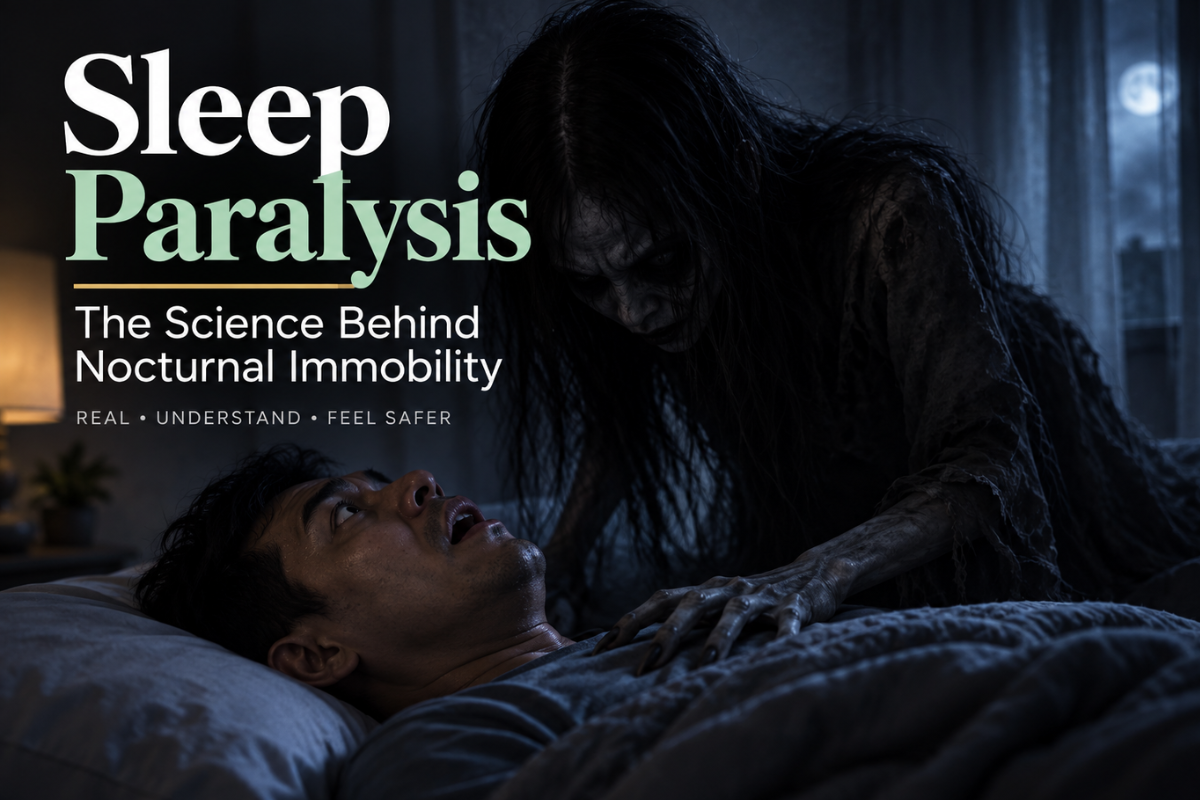
Illustrative image | AI-generated
This article provides general health information and does not replace professional medical advice, diagnosis or treatment. Sleep paralysis is usually temporary, but frequent episodes, severe daytime sleepiness or other persistent sleep problems should be discussed with a healthcare professional.
SLEEP HEALTH — Sleep paralysis can be frightening. A person may become aware of their surroundings while temporarily being unable to move or speak. Some people also experience vivid hallucinations or the powerful feeling that somebody — or something — is nearby.
The experience has been interpreted in many different ways throughout history and across cultures. Stories involving spirits, ghosts, demons or other supernatural beings have often been associated with episodes that resemble sleep paralysis.
Modern sleep medicine describes sleep paralysis as a temporary state associated with the transition between rapid eye movement (REM) sleep and wakefulness. The experience can feel extremely real, even though the frightening sights, sounds or sensations may be hallucinations occurring during that transition.
During sleep paralysis, awareness can return while the temporary muscle inactivity associated with REM sleep has not yet fully ended. You may know that you are awake but temporarily be unable to move or speak.
What Is Sleep Paralysis?
Sleep paralysis is a temporary inability to move or speak that occurs when falling asleep or waking up.
During an episode, a person may be conscious and aware of the room around them. However, voluntary movement can remain temporarily restricted.
Episodes usually resolve on their own. Although the experience can be extremely frightening, isolated episodes are generally not considered dangerous.
The unusual combination of wakeful awareness, temporary paralysis and dream-like experiences helps explain why sleep paralysis can feel so different from an ordinary nightmare.
What Actually Happens to Your Body?
One important part of understanding sleep paralysis is understanding REM sleep.
REM stands for rapid eye movement. It is a stage of sleep strongly associated with vivid dreaming.
During REM sleep, the brain naturally reduces activity in many of the muscles responsible for voluntary movement. This is known as REM atonia.
This temporary muscle inactivity is a normal part of sleep and helps prevent the body from physically acting out many of the movements occurring in dreams.
The brain enters a stage of sleep in which vivid dreaming commonly occurs.
Sometimes conscious awareness returns while the body is still transitioning out of REM sleep.
The temporary muscle inactivity of REM sleep may persist briefly after awareness returns.
Dream-like sights, sounds and sensations can overlap with awareness of the real bedroom.
A simple way to understand sleep paralysis is that awareness can return before the body's REM-related muscle paralysis has completely disappeared. The transition normally lasts only a short period.
Why Can People See Ghosts, Shadows or “Demons”?
This is one of the most frightening and fascinating features of sleep paralysis.
Some people report seeing a dark figure standing beside the bed. Others describe a person sitting on their chest, footsteps approaching them, whispering, strange sounds or a powerful sensation that another presence is inside the room.
These experiences can feel extraordinarily convincing because the person may already be partly or fully aware of their real surroundings.
Sleep-related hallucinations can occur during the transition between dreaming and wakefulness. As a result, dream-like imagery or sensations may appear to exist within the person's actual bedroom.
Seeing or sensing a frightening figure during sleep paralysis does not mean that the person is deliberately imagining it. The experience itself can be vivid and frightening. Medical science describes these perceptions as sleep-related hallucinations rather than evidence that a physical figure is actually present.
Spirits or Science?
Sleep paralysis has been interpreted through spiritual, religious and cultural beliefs for centuries.
Different cultures have described frightening nighttime experiences involving spirits, supernatural beings, witches, demons or an unseen presence pressing against the sleeper.
People are free to interpret personal experiences according to their own beliefs. From a medical perspective, however, the paralysis and associated hallucinations can be explained within known features of sleep physiology, particularly the transition into or out of REM sleep.
👻 Spiritual Interpretation
Some people and cultures interpret the sensation of a presence, pressure on the body or frightening figures as a spiritual or supernatural experience. These interpretations are matters of cultural or personal belief.
🧠 Scientific Explanation
Sleep medicine associates sleep paralysis with the boundary between REM sleep and wakefulness. REM-related muscle inactivity can briefly continue after awareness returns, while dream-like hallucinations may also occur.
Science can investigate the neurological and physiological processes associated with sleep paralysis. It does not need to determine a person's religious or spiritual beliefs in order to explain the recognised sleep phenomenon.
What Can Trigger Sleep Paralysis?
There is not always one identifiable reason why a person experiences sleep paralysis. However, several sleep and lifestyle factors have been associated with a greater likelihood of episodes.
- Not getting enough sleep
- An irregular sleep schedule
- Shift work or frequently changing sleep times
- Jet lag and disrupted sleep
- High levels of stress
- Poor sleep quality
- Sleeping on the back in some people
- Certain sleep disorders
Sleep paralysis can also occur in otherwise healthy people without an obvious trigger.
If episodes seem to occur after periods of poor or irregular sleep, keeping a consistent sleep schedule and getting adequate sleep may be worth prioritising.
Is Sleep Paralysis Dangerous?
For most people, occasional sleep paralysis is not physically dangerous. Normal movement returns once the episode ends.
However, the experience itself can produce intense fear, anxiety and panic. Some people may become afraid to return to sleep after an episode.
Repeated episodes can also interfere with sleep quality if the fear of experiencing another episode causes someone to delay sleep or repeatedly wake during the night.
Frequent sleep paralysis may sometimes occur alongside other sleep problems, which is one reason persistent or troublesome episodes are worth discussing with a healthcare professional.
What Should You Do During an Episode?
If you recognise that you are experiencing sleep paralysis, reminding yourself that the episode is temporary may help reduce panic.
- Try to remain as calm as possible.
- Remind yourself that the episode will pass.
- Focus on slow, steady breathing.
- Try making a small movement, such as moving a finger or toe.
- Focus your attention on something familiar in the room.
- Avoid struggling aggressively against the paralysis if this increases panic.
There is no guaranteed technique that immediately ends every episode. Different strategies may work differently for different people.
How Can You Reduce Sleep Paralysis Episodes?
There is no single method that guarantees sleep paralysis will never happen again. Improving overall sleep habits, however, may help some people, particularly when episodes are associated with sleep deprivation or an irregular schedule.
Try to go to sleep and wake up at similar times each day whenever your schedule allows.
Repeated sleep deprivation can disrupt normal sleep patterns and may increase the likelihood of episodes in susceptible people.
Relaxation, exercise and healthy stress-management strategies may support better overall sleep.
A consistent wind-down routine and comfortable sleep environment can support healthy sleep habits.
When Should You See a Doctor?
An occasional episode of sleep paralysis does not necessarily require medical treatment.
Consider speaking with a healthcare professional if episodes happen frequently, cause significant distress or are affecting your ability to sleep normally.
Medical assessment may also be appropriate if sleep paralysis occurs alongside other significant sleep-related symptoms.
- Frequent episodes of sleep paralysis
- Severe fear of going to sleep
- Persistent difficulty sleeping
- Excessive daytime sleepiness
- Sudden episodes of muscle weakness while awake
- Repeatedly falling asleep unexpectedly during the daytime
- Sleep problems that interfere with work, school or daily activities
Sleep paralysis can sometimes occur alongside sleep disorders such as narcolepsy. Frequent paralysis combined with severe daytime sleepiness or other unusual sleep symptoms should be discussed with a healthcare professional.
What Do You Think?
For generations, people around the world have interpreted this frightening nighttime experience in very different ways.
Spirits or science — how do you interpret sleep paralysis?Whatever your personal belief, understanding what happens to the brain and body during sleep can help make the experience less mysterious.
Key Takeaways
- Sleep paralysis is a recognised sleep phenomenon in which a person can temporarily be unable to move or speak while falling asleep or waking.
- It is closely associated with the transition into or out of REM sleep.
- During REM sleep, the brain naturally reduces voluntary muscle movement.
- Awareness can sometimes return before this REM-related muscle inactivity has fully ended.
- Some people experience vivid hallucinations, including shadows, voices, pressure sensations or the feeling that somebody is nearby.
- These experiences can feel extremely real even though medical science describes them as sleep-related hallucinations.
- Sleep deprivation, irregular sleep schedules and disrupted sleep may increase the likelihood of episodes in some people.
- Occasional sleep paralysis is generally not considered physically dangerous, although it can be frightening.
- Frequent episodes, severe daytime sleepiness or significant sleep disruption should be discussed with a healthcare professional.
Sources & References
- Cleveland Clinic. Sleep Paralysis: What It Is, Causes, Symptoms & Treatment. Cleveland Clinic sleep paralysis information
- NHS. Sleep paralysis. NHS sleep paralysis guidance
- MedlinePlus. Sleep Disorders. MedlinePlus sleep information
- National Institute of Neurological Disorders and Stroke. Narcolepsy. NINDS narcolepsy information
About KnowvaLife
KnowvaLife is a Singapore-based health information and media platform providing practical, evidence-informed health content. We explain health topics in simple, easy-to-understand language using reliable health and medical sources.