Indonesia Reports 23 New Mpox Cases as 2026 Total Reaches 184
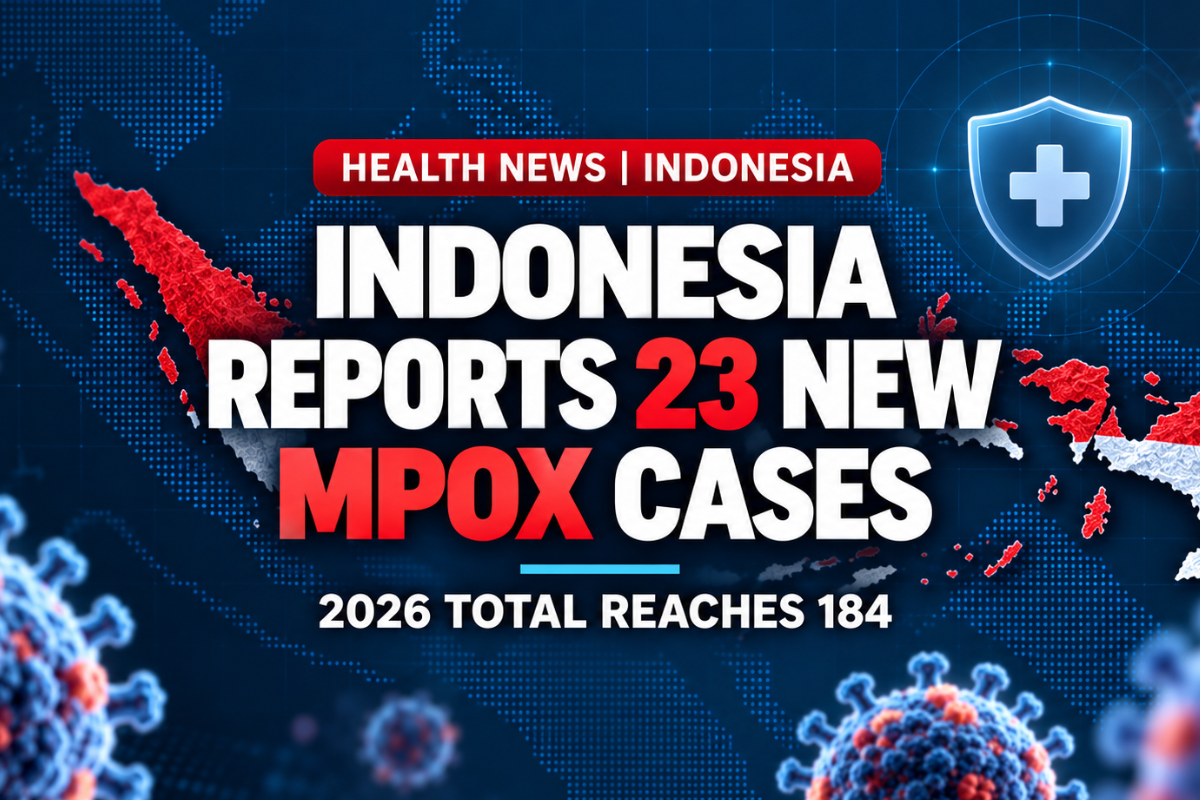
Indonesia’s latest emerging-infections report recorded 23 newly confirmed mpox cases from 29 suspected cases in Epidemiological Week 38, bringing the country’s 2026 total to 184 confirmed cases across eight provinces.
This article is for general educational purposes and does not replace diagnosis or personalised medical advice. If you develop a new or unexplained rash, especially after close contact with someone who has symptoms, contact a healthcare professional and follow local public-health advice.
In This Article
Latest Official Update
Indonesia’s Ministry of Health published its Week 39 emerging-infections report on 4 October 2026. The report contains national surveillance data through Epidemiological Week 38, covering 20 to 26 September 2026.
For mpox, authorities recorded 29 suspected cases during that reporting period. Laboratory results listed 23 as positive, five as negative and one as still under examination.
The 23 newly confirmed cases were reported from six provinces. They brought Indonesia’s 2026 total to 184 confirmed mpox cases across eight provinces.
These figures come from Indonesia’s official New All Record and Early Warning and Response System surveillance data. They are reported cases, not rumours. Surveillance totals may still be revised as investigations and data validation continue.
What the Numbers Mean
A “suspected” case is someone whose symptoms or exposure history meets a public-health definition for further assessment. It does not mean the person has been confirmed to have mpox.
A confirmed case requires appropriate laboratory evidence. In the Week 38 dataset, 23 of the 29 suspected cases tested positive, five tested negative and one result remained pending at the time of reporting.
The new confirmations were recorded in DKI Jakarta, Banten, Bali, East Java, Yogyakarta and West Java. The cumulative 2026 total covered eight provinces: DKI Jakarta, West Java, Banten, East Java, South Sumatra, Bali, East Kalimantan and Yogyakarta.
A rise in detected cases does not by itself show how widely the virus is circulating. It does signal the value of timely testing, contact follow-up, clear symptom awareness and non-stigmatising health communication.
What Is Mpox?
Mpox is an infectious disease caused by the monkeypox virus. It can cause a painful rash or skin lesions, fever and swollen lymph nodes, although the combination and severity of symptoms vary.
Many people recover with supportive care, but some develop complications and require medical treatment. Symptoms commonly last two to four weeks.
Anyone can get mpox when exposed. The infection is not confined to one nationality, gender, sexual orientation or community.
Symptoms to Recognise
A rash is a key sign. Lesions may begin as flat or raised spots before developing into fluid-filled or pus-filled blisters that crust and heal. The rash can appear on the face, hands, feet, mouth, genital or anal areas, and sometimes elsewhere on the body.
Other possible symptoms include fever, headache, muscle aches, back pain, low energy, sore throat and swollen lymph nodes.
Some people develop skin lesions before fever or other symptoms. Others may have only a small number of lesions, so a limited rash should not automatically be dismissed.
Contact a healthcare professional if you develop an unexplained rash or lesions, especially after close or intimate contact with someone who has mpox symptoms or a confirmed diagnosis. Mention the possible exposure before arriving so the facility can advise you appropriately.
How Mpox Spreads
Mpox most often spreads through close contact with an infected person. This can include direct skin-to-skin contact with lesions or scabs, intimate or sexual contact and contact with saliva or respiratory secretions during prolonged close interaction.
Transmission can also occur through recently contaminated items such as bedding, towels or clothing. A pregnant person can pass the virus to the baby during pregnancy or around birth.
People with mpox can be infectious until all lesions have crusted, the scabs have fallen off and a fresh layer of skin has formed.
Avoid direct contact with a symptomatic person’s rash, lesions, scabs and body fluids. Do not share bedding, towels, clothing or personal items that may have contacted lesions.
What to Do After Possible Exposure
If you think you had close contact with someone who has mpox, contact a healthcare provider or local health authority for advice. Explain when and how the contact occurred.
Monitor your health for new rash, lesions, fever, swollen lymph nodes and other symptoms. Public-health teams may give specific instructions about monitoring, testing, limiting close contact or vaccination depending on the exposure and local policy.
If symptoms develop, reduce close physical contact with other people, cover lesions where practical, avoid sharing personal items and seek medical advice promptly.
Several conditions can cause rashes or blisters. A healthcare professional can assess the pattern, exposure history and need for laboratory testing.
Who May Become Seriously Ill?
Severe illness can occur in anyone, but the risk may be higher for people with weakened immune systems, pregnant people, young children and people with extensive skin disease or other significant health conditions.
Possible complications include bacterial infection of skin lesions, dehydration, eye involvement, pneumonia and inflammation affecting other organs.
Prompt assessment is especially important if lesions affect the eyes, severe pain cannot be controlled, breathing becomes difficult, confusion develops or the person appears rapidly more unwell.
Reducing Risk Without Stigma
Risk communication works best when it focuses on behaviours and exposure rather than identities. Anyone who has close contact with an infectious person can acquire mpox.
Useful preventive steps include avoiding close contact with unexplained rashes or lesions, not sharing contaminated personal items, practising good hand hygiene and following local advice on testing, isolation and vaccination.
Stigma can discourage people from seeking care or sharing relevant exposure information. Respectful, factual communication supports earlier diagnosis and better outbreak control.
Talk about the infection, symptoms and routes of exposure—not assumptions about a person or community.
Key Takeaways
- Indonesia’s report published on 4 October recorded 23 confirmed mpox cases among 29 suspected cases in the Week 38 surveillance dataset.
- The 2026 total reached 184 confirmed cases across eight provinces.
- “Suspected” and “confirmed” are different surveillance categories; a suspected case is not automatically mpox.
- Possible symptoms include a rash or lesions, fever, headache, muscle aches, low energy and swollen lymph nodes.
- Mpox spreads mainly through close contact with an infected person, particularly contact with lesions, scabs or body fluids.
- Anyone can get mpox. Prevention messages should focus on exposure and symptoms without stigmatising individuals or communities.
- Seek medical advice for an unexplained rash, especially after possible close contact with a symptomatic or confirmed case.
Sources & References
- Ministry of Health, Republic of Indonesia. Development of the Emerging Infectious Disease Situation, Epidemiological Week 39, 2026 (published 4 October 2026; data through Week 38). Official report page
- Ministry of Health, Republic of Indonesia. Rapid Risk Assessment: Mpox in Indonesia, 2026. Official risk assessment
- Ministry of Health, Republic of Indonesia — Ayo Sehat. Recognise and Be Aware of Mpox. Public-health explainer
- World Health Organization. Mpox: Questions and Answers. WHO Q&A
- World Health Organization. Mpox Fact Sheet. WHO fact sheet
About KnowvaLife
KnowvaLife creates practical health and wellness content designed to make everyday health information easier to understand. Our content is educational and does not replace personalised advice from qualified healthcare professionals.