Building Healthy Eating Habits in the First Two Years
The first two years are an important period for growth and the development of eating habits. Introducing appropriate foods, textures and flavours while responding to a child's hunger and fullness cues can help build a positive foundation for eating.
This article provides general educational information and does not replace personalised advice from a paediatrician, dietitian or other qualified healthcare professional. Feeding needs vary according to a child's age, development, growth and medical circumstances.
In This Article
Introduction
A child's relationship with food starts developing long before they can tell you what they want for dinner.
During infancy and toddlerhood, children experience new flavours, smells and textures while learning how to chew, swallow and feed themselves.
These early experiences can help establish eating patterns that continue as the child grows.
Parents do not need to create a perfect diet. A more useful goal is to offer appropriate, nutritious foods repeatedly while allowing the child to gradually become comfortable with eating them.
Why the First Two Years Matter
Growth is rapid during the first years of life, making good nutrition particularly important.
Children need sufficient energy and nutrients to support physical growth, brain development and everyday activity.
This period is also when children begin learning what food feels and tastes like and how family mealtimes work.
Repeated exposure to different nutritious foods can help children become familiar with a wider variety of flavours.
Think beyond individual meals. Healthy eating habits are built through repeated experiences over weeks and months, not by whether every meal is perfectly balanced.
When Complementary Foods Begin
During early infancy, breast milk or appropriate infant formula provides the baby's main nutrition.
Around six months of age, babies generally begin needing complementary foods in addition to milk to meet their changing nutritional and developmental needs.
A baby's developmental readiness matters too. Signs may include being able to sit with support and control the head and neck while showing interest in food.
Complementary feeding does not mean milk suddenly becomes unimportant. Foods are introduced alongside continued milk feeding as the baby's diet gradually becomes more varied.
Babies develop at different rates. If you are uncertain whether your baby is ready for complementary foods, discuss feeding with your child's healthcare professional.
Introduce Different Foods and Textures
Babies need opportunities to experience more than one flavour and texture.
Foods can progress from softer textures toward mashed, minced, lumpy and appropriately sized family foods as feeding skills develop.
Texture progression helps children practise chewing and other oral skills.
Offer vegetables, fruits, grains, protein-rich foods and other suitable foods rather than relying on only a few familiar choices.
A child may reject a new food the first time it appears. This does not necessarily mean the food should disappear from the menu permanently.
If your child rejects a new vegetable or other food, try offering it again on another day without pressure. Familiarity often develops through repeated exposure.
Include Nutrient-Rich Foods
As complementary feeding develops, variety helps children obtain nutrients from different food groups.
Iron-rich foods are particularly important because an infant's nutritional requirements change as stored iron from birth decreases.
Suitable foods may include appropriately prepared meat, fish, eggs, tofu, legumes and iron-fortified foods, depending on the child's age and feeding abilities.
Vegetables and fruits provide vitamins, minerals and other beneficial components, while grains and other carbohydrate foods contribute energy.
Meals do not need to be complicated. Simple combinations of familiar family foods can work well when texture, portion and seasoning are appropriate for the child's developmental stage.
Avoid Too Much Sugar and Salt
Young children do not need foods to taste as sweet or salty as many adult foods.
Regularly offering very sweet foods and drinks can increase children's exposure to added sugars while displacing more nutritious choices.
Water can become the normal drink as appropriate alongside milk rather than making sweet drinks part of the everyday routine.
Similarly, there is no need to add large amounts of salt to a young child's food.
Parents can allow children to experience the natural flavours of foods rather than assuming every meal needs extra sugar or salt to be accepted.
You do not need to make children's food bland, but herbs and naturally flavourful ingredients can provide variety without relying heavily on sugar or salt.
Let Children Learn Hunger and Fullness
Children can show signs that they are hungry or have had enough even before they can explain these feelings in words.
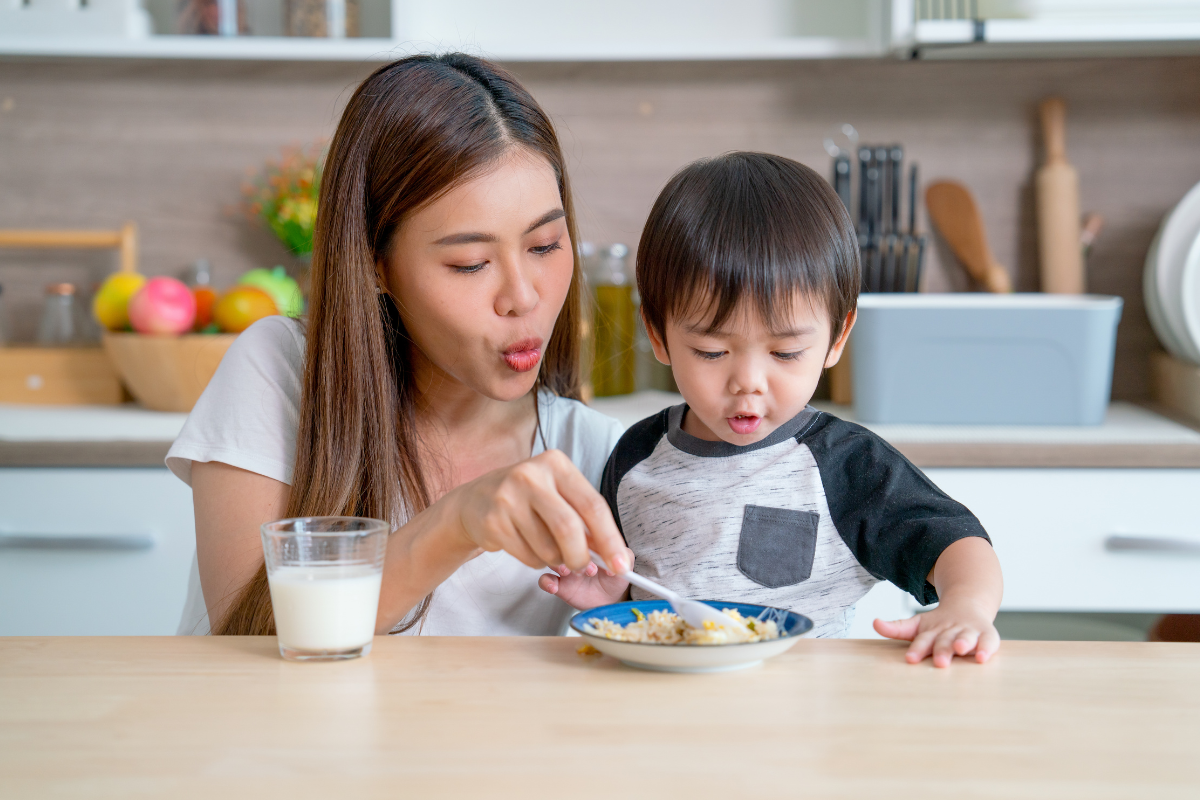
Responsive feeding means noticing these cues and responding appropriately rather than automatically pushing a child to finish everything served.
A hungry child may show interest in food or reach for it. A child who has had enough may turn away, close the mouth or lose interest in eating.
Parents decide what appropriate foods are offered and when meals take place, while children can gradually learn to respond to their own appetite.
Forcing a child to finish a meal can turn eating into a struggle. Appetite naturally varies between meals and from one day to another.
What About Picky Eating?
Food preferences can change as children move into toddlerhood.
A food that was happily eaten one week may suddenly be refused the next.
Parents can continue offering a variety of appropriate foods without turning every refusal into a battle.
Serve a familiar food alongside something less familiar and allow the child to explore the meal.
Repeated exposure can be useful because accepting a new food may take several opportunities.
Try not to immediately replace every rejected meal with a favourite snack. Maintaining predictable meal and snack routines can help children understand when food will be available.
Family Meals Can Be Learning Opportunities
Children learn by watching the people around them.
Eating together gives them opportunities to observe family members trying vegetables, drinking water and enjoying different foods.
Mealtimes also provide opportunities for conversation and social interaction.
Whenever practical, reduce distractions such as television or entertainment videos during meals so children can pay attention to eating and family interaction.
Should Food Be Used as a Reward?
Using sweets or other highly desired foods as a reward can unintentionally make those foods seem more valuable than everyday nutritious foods.
For example, repeatedly saying “finish your vegetables and then you can have something sweet” may teach the child that vegetables are the unpleasant task and dessert is the prize.
Praise, attention, playtime or another non-food reward can sometimes be used instead.
The aim is to help children experience food as nourishment and enjoyment rather than as a bargaining tool.
Feeding Safely
Food safety and choking prevention are especially important during infancy and toddlerhood.
Food texture and size should match the child's developmental abilities.
Young children should be seated appropriately and supervised while eating rather than walking or running around with food in their mouths.
Foods that present a choking hazard need to be avoided or modified appropriately.
Whole nuts, for example, are not suitable for young children because of choking risk, although nut products may be introduced in developmentally appropriate forms when suitable.
Honey should not be given to infants younger than 12 months because of the risk of infant botulism.
Always supervise young children while they eat. Choking can happen silently, so safe food preparation, appropriate positioning and active supervision are important.
When to Speak With a Healthcare Professional
Feeding difficulties are common, but some situations deserve professional assessment.
Seek advice if your child regularly coughs, chokes or struggles to swallow during meals, has difficulty progressing to appropriate textures or eats an extremely restricted range of foods.
Concerns about poor growth, possible food allergy or persistent vomiting should also be discussed with a healthcare professional.
A paediatrician or dietitian can assess whether additional nutritional or feeding support is needed.
Key Takeaways
- The first two years are an important period for growth and the development of eating habits.
- Complementary foods are generally introduced around six months alongside continued milk feeding.
- Offer a variety of appropriate flavours and textures as feeding skills develop.
- Include nutrient-rich foods, including appropriate sources of iron.
- Young children do not need large amounts of added sugar or salt.
- Responsive feeding encourages parents to recognise children's hunger and fullness cues.
- Repeated exposure can help children become more familiar with new foods.
- Family meals can help children learn healthy eating behaviours by watching others.
- Safe food preparation and active supervision are essential for reducing choking risk.
Sources & References
- Health Promotion Board, Singapore — HealthHub. Introducing Solid Foods to Your Baby. HealthHub Singapore
- KK Women’s and Children’s Hospital. Nutrition and Feeding in Infants and Young Children. KK Women's and Children's Hospital
- Health Promotion Board, Singapore — HealthHub. Parent Hub: Nutrition and Healthy Eating for Children. HealthHub Singapore
- World Health Organization. Infant and Young Child Feeding. World Health Organization
About KnowvaLife
KnowvaLife creates practical health and wellness content designed to make everyday health information easier to understand. Our content is educational and does not replace personalised advice from qualified healthcare professionals.