
Indonesia Wildfire Smoke Reaches the Philippines
Smoke from severe wildfires in Indonesia has reached parts of the Philippines and may continue affecting the country for several days. Here is what families should know about haze, air pollution and protecting respiratory health.
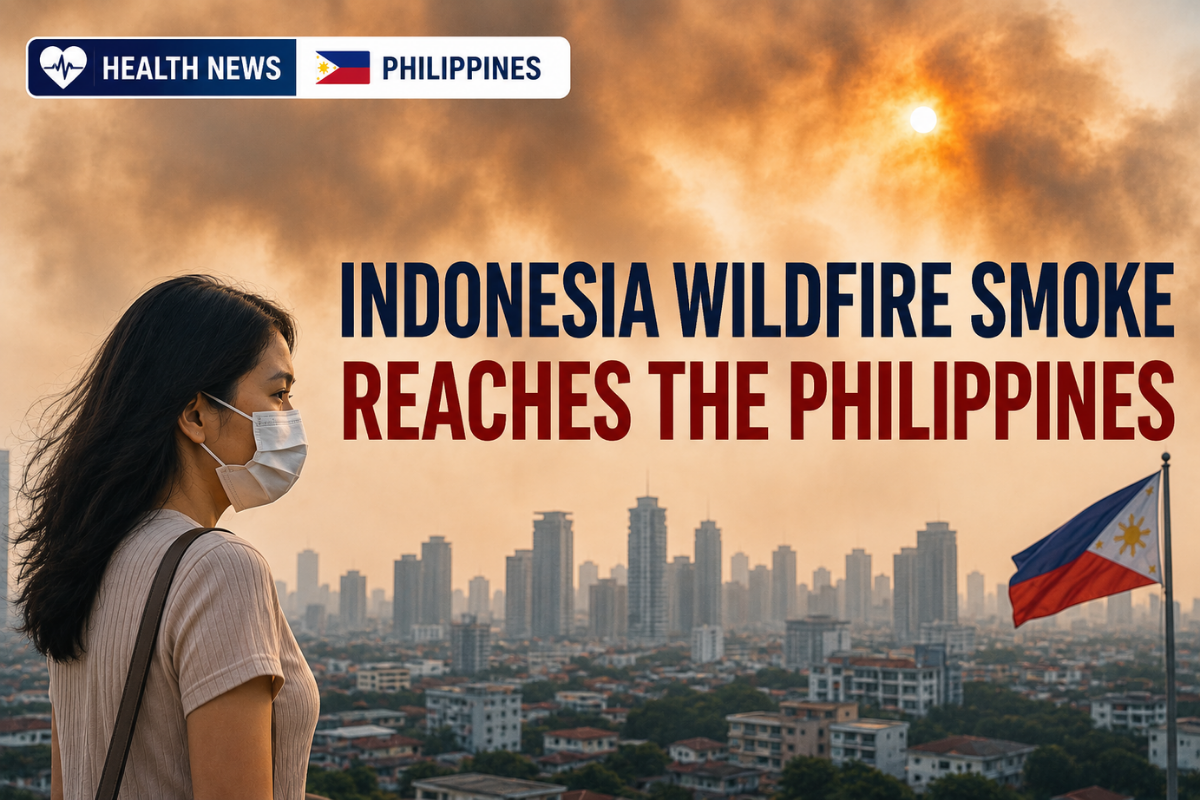
Illustrative image | AI-generated
This article provides general health information and does not replace medical advice. People with asthma, heart disease, lung disease or other medical conditions should follow advice from their healthcare professional. Seek medical attention if breathing becomes difficult or symptoms become severe.
HEALTH NEWS — Smoke from major wildfires in Indonesia has reached parts of the Philippines, according to a University of the Philippines scientist, and the smoke could remain over the country for several days.
The development comes as Indonesia battles widespread forest and land fires during an intense dry period.
Smoke from these fires can travel hundreds or even thousands of kilometres depending on wind direction, atmospheric conditions and rainfall.
That means a fire occurring in one country can sometimes affect air quality far beyond its borders.
On August 31, 2026, ABS-CBN News reported that smoke from Indonesian forest fires had reached parts of the Philippines. A University of the Philippines scientist said the smoke could continue affecting the country for several days depending on weather and wind conditions.
Where Is the Smoke Coming From?
Indonesia is experiencing a significant wildfire season, with major fires reported across parts of Sumatra and Kalimantan.
Dry weather has made vegetation and peatlands more vulnerable to burning.
Indonesia's Health Ministry said forest and land fires were affecting seven provinces as of late August:
- West Kalimantan
- Central Kalimantan
- South Kalimantan
- East Kalimantan
- Jambi
- Riau
- South Sumatra
Indonesian authorities have deployed thousands of personnel, aircraft and other resources to control the fires.
How Can Indonesian Smoke Reach the Philippines?
Wildfire smoke does not stay directly above the place where a fire occurs.
Fine particles and gases can rise into the atmosphere and be transported by winds over long distances.
The direction of the smoke can change depending on regional winds, rainfall and other weather conditions.
This type of pollution is known as transboundary haze because smoke crosses national borders.
People in the Philippines may experience hazy conditions even though the actual forest fires are occurring hundreds of kilometres away in Indonesia.
Why Can Wildfire Smoke Affect Your Health?
Wildfire smoke contains a mixture of gases and very small airborne particles.
One of the main health concerns is fine particulate matter, often called PM2.5.
These particles are extremely small and can be inhaled deep into the lungs.
Exposure can irritate the respiratory system and may make existing heart or lung conditions worse.
Smoke may irritate the airways and cause coughing, wheezing or shortness of breath.
Haze and smoke may cause watery, red, itchy or uncomfortable eyes.
Some people may experience a sore throat, runny nose, dryness or irritation.
People with asthma, lung disease or cardiovascular disease may be more sensitive to polluted air.
Who Should Be Extra Careful?
Haze can affect anyone, but some people are more vulnerable to poor air quality.
Children's lungs are still developing and they may breathe more air relative to their body size while playing outdoors.
Older people may be more likely to have existing heart or lung conditions that can be affected by polluted air.
Pregnant women should take additional precautions when air pollution reaches unhealthy levels.
Smoke can irritate sensitive airways and may trigger wheezing, coughing or an asthma attack.
What Symptoms Can Haze Cause?
Not everyone exposed to smoke will develop symptoms.
When symptoms occur, they can include:
- Coughing
- Sore or irritated throat
- Runny or irritated nose
- Watery or irritated eyes
- Wheezing
- Chest discomfort
- Shortness of breath
- Headache or general discomfort
Symptoms may be stronger in people with asthma, chronic obstructive pulmonary disease, heart disease or other existing medical conditions.
Philippine health guidance advises people to seek medical care if they develop difficulty breathing, significant cough, chest pain, increased tearing of the eyes or persistent nose and throat irritation.
Should You Wear a Mask?
A suitable, well-fitting protective mask can reduce exposure to airborne particles when you need to go outdoors during smoky conditions.
Philippine Department of Health haze guidance recommends appropriate masks when outdoor exposure cannot be avoided.
However, wearing a mask should not be treated as a reason to remain outdoors for long periods when air pollution is poor.
Reducing exposure remains important.
Should You Stay Indoors?
If smoke or haze becomes significant in your area, staying indoors can help reduce exposure.
The Philippine Department of Health has previously advised higher-risk groups to stay indoors during haze events and avoid unnecessary outdoor activity.
When outdoor air is poor:
- Reduce unnecessary trips outside.
- Keep doors and windows closed when smoke is heavy outside.
- Avoid strenuous outdoor exercise.
- Keep children indoors when air pollution is unhealthy.
- Use air filtration or an air purifier where available.
Masks and air purifiers can be useful, but one of the most effective practical steps during unhealthy haze conditions is reducing the amount of time you spend breathing polluted outdoor air.
Should You Exercise Outdoors During Haze?
Strenuous physical activity makes you breathe faster and more deeply.
This means you may inhale more polluted air than when you are resting.
If air quality is unhealthy or the smell of smoke is strong, consider postponing outdoor running, cycling, sports or other strenuous activities.
Moving your workout indoors may help reduce exposure.
What About Children?
Children are among the groups that need additional protection during haze.
Parents should pay attention to local air-quality information before allowing prolonged outdoor play or sports.
Children with asthma or existing heart or lung conditions may require additional caution.
Make sure children who normally use prescribed asthma medication continue following their doctor's treatment plan.
What About Older Adults?
Older adults may be more vulnerable because they are more likely to have chronic heart, lung or other medical conditions.
During significant haze, family members should watch for new or worsening symptoms such as:
- Shortness of breath
- Persistent coughing
- Wheezing
- Unusual fatigue
- Chest discomfort
Seek medical advice if symptoms become concerning.
Can Haze Trigger Asthma?
Yes.
Air pollution and smoke can irritate sensitive airways and may trigger asthma symptoms in some people.
These symptoms can include:
- Wheezing
- Coughing
- Chest tightness
- Shortness of breath
People with asthma should continue following their prescribed treatment plan and make sure they have access to their usual medication.
If your usual asthma medicine is not controlling your symptoms, or your breathing becomes increasingly difficult, seek medical care promptly.
Can Wildfire Smoke Affect the Eyes?
Yes.
Smoke and suspended particles can irritate the eyes.
You may experience:
- Redness
- Itching
- Watering
- Dryness
- Burning or discomfort
Try not to rub irritated eyes.
If eye pain is severe or symptoms continue, seek medical advice.
Does Drinking Water Help?
Drinking water does not remove smoke particles from your lungs.
However, maintaining normal hydration is still important, especially during hot weather.
Fluids may also help keep your mouth and throat comfortable if smoky air causes dryness or irritation.
How Can You Keep Indoor Air Cleaner?
When outdoor air quality becomes poor, several simple steps can help limit smoke entering your home.
- Close windows and doors when outdoor smoke is heavy.
- Avoid smoking indoors.
- Avoid burning candles or other materials that add particles to indoor air.
- Use an air purifier with suitable particle filtration if available.
- Keep frequently used rooms as clean and smoke-free as possible.
If the outdoor air improves, ventilation can be adjusted accordingly.
How Long Could the Smoke Remain?
The exact duration depends on changing weather conditions.
A University of the Philippines scientist told ABS-CBN News that smoke reaching the Philippines could persist for several days.
However, wind direction and rainfall can change quickly.
Some places may experience more noticeable haze than others.
Do not assume that today's air quality will be the same tomorrow. Continue checking information from Philippine environmental, weather and health authorities.
How Serious Are Indonesia's Wildfires?
Indonesia is experiencing a major increase in forest and land fires.
Reuters reported on August 31 that more than 9,000 hotspots had been recorded in Indonesia during August.
Nearly 95,000 hectares were burned in July alone.
Authorities have deployed firefighting aircraft, water-bombing operations and thousands of personnel to affected areas.
Indonesia's Health Ministry has also increased its health response in several provinces affected by forest-fire smoke.
Why Are Health Authorities Concerned About PM2.5?
Fine particulate matter known as PM2.5 is one of the major pollutants associated with wildfire smoke.
These particles are less than 2.5 micrometres across.
Because they are so small, they can travel deep into the respiratory system.
Indonesia's Health Ministry has warned that PM2.5 from forest fires can affect the lungs and increase the risk of respiratory illness, particularly among vulnerable groups.
When Should You See a Doctor?
Mild irritation may improve after you move away from smoky air.
However, seek professional medical care if you develop:
- Difficulty breathing
- Severe or worsening wheezing
- Chest pain
- Persistent or worsening cough
- Asthma symptoms that do not respond to usual medication
- Severe eye irritation
- Symptoms that continue even after reducing smoke exposure
Do not wait for serious breathing difficulties or chest pain to resolve on their own. Seek urgent medical care if symptoms are severe.
What Should Families in the Philippines Do Now?
There is no need to panic simply because smoke has crossed into the Philippines.
The more useful approach is to stay informed and adjust activities according to conditions in your area.
Families can:
- Check official air-quality updates.
- Pay attention to visible haze and smoke conditions.
- Reduce outdoor activity if air pollution becomes unhealthy.
- Protect children, older adults and people with heart or lung conditions.
- Wear a suitable mask if outdoor exposure cannot be avoided.
- Keep indoor air as clean as possible.
- Follow official government health advisories.
Wildfire smoke from Indonesia has reached parts of the Philippines and may remain for several days depending on weather conditions. Most people should focus on monitoring local air quality and reducing unnecessary smoke exposure. Children, older adults, pregnant women and people with asthma, heart disease or lung conditions should take additional care.
Key Takeaways
- Smoke from Indonesian forest fires has reached parts of the Philippines.
- A University of the Philippines scientist said the smoke could persist for several days depending on weather conditions.
- Wildfire smoke contains fine particles that can irritate the nose, throat, eyes and lungs.
- Children, older adults, pregnant women and people with asthma, heart disease or lung disease may be more vulnerable.
- Reduce strenuous outdoor activity when air quality is poor.
- Wear an appropriate mask if outdoor exposure cannot be avoided.
- Keep windows and doors closed when outdoor smoke is heavy.
- Continue checking official Philippine air-quality and health advisories.
- Seek medical care if breathing problems, chest pain or other serious symptoms develop.
Sources & References
- ABS-CBN News. Indonesia forest-fire smoke reaches Philippines, may persist for days, UP scientist says. Published August 31, 2026.
- Department of Health Philippines — Cordillera Administrative Region. Preventive Measures During Haze Caused by Forest Fires. Philippine public-health guidance on haze exposure and vulnerable groups.
- Ministry of Health Republic of Indonesia. Kemenkes Siap Siaga Hadapi Dampak Karhutla, 848 Tenaga Kesehatan Dimobilisasi. Published August 29, 2026.
- Ministry of Health Republic of Indonesia. Wear Masks and Monitor Air Quality to Prevent Health Effects of Forest-Fire Smoke. Published August 21, 2026.
- Reuters. How severe are Indonesia's wildfires? Published August 31, 2026.
About KnowvaLife
KnowvaLife explains health news and everyday health topics in simple, easy-to-understand language. We use reliable health sources to help readers understand important developments and make more informed health decisions.