Protein: How Much Do You Really Need Each Day?
Protein is essential for muscles, enzymes, hormones and many other functions, but more is not always better. Your needs depend on factors such as body size, age, activity level and overall health.
This article provides general nutrition information for educational purposes only. Individual protein requirements can vary with age, body size, activity, pregnancy, health conditions and other factors. People with kidney disease or other medical conditions should seek personalised advice from a qualified healthcare professional.
In This Article
Introduction
Protein has become one of the most heavily promoted nutrients in modern wellness culture. High-protein yogurts, shakes, bars, cereals and snacks are everywhere, and social media can make it seem as though everyone needs to dramatically increase their intake.
Protein is certainly important. It supplies amino acids that the body uses to build and maintain tissues and to make many functional molecules. But the amount you need is not determined by trends or by how much protein a product can fit on its label.
For many adults, normal meals can provide enough protein without specialised products. Understanding your approximate needs and choosing a variety of nutritious sources is more useful than simply trying to eat as much protein as possible.
What Protein Does in Your Body
Protein is made from smaller building blocks called amino acids. The body can produce some amino acids itself, while essential amino acids must come from food.
Protein contributes to the structure and maintenance of muscle and other tissues. It is also involved in enzymes, hormones and many processes that help the body function normally.
This means protein is important whether or not you exercise in a gym. Your body continuously uses amino acids as tissues are maintained, repaired and renewed.
Protein also contributes energy, although its primary role in a balanced diet is different from the major energy contribution generally provided by carbohydrates and fats.
Think of protein as one part of a balanced meal rather than the entire meal. Vegetables, fruit, whole grains and other nutritious foods still provide fibre, vitamins, minerals and other nutrients that protein foods alone cannot replace.
How Much Protein Do Adults Need?
There is no single gram target that fits every adult. WHO's 2026 healthy-diet guidance states that protein providing around 10–15% of total daily energy is generally sufficient for adults. For a person of healthy body weight eating around 2,000 calories a day, WHO gives an approximate range of 50–75 grams of protein.
Another commonly used reference point is the adult Recommended Dietary Allowance of 0.8 grams of protein per kilogram of body weight per day. This represents a minimum intake designed to meet the needs of most healthy adults, rather than a universal optimum for every goal.
For example, using 0.8 grams per kilogram, a 60 kg adult would calculate about 48 grams per day, while an 80 kg adult would calculate about 64 grams.
These figures are starting points. Age, physical activity, energy intake, pregnancy, illness and goals such as building or preserving muscle can affect individual requirements.
Do not assume that a protein target seen online applies to you. Very high targets are often designed for particular sports or body-composition goals rather than the general adult population.
Your Needs May Be Different
People who train regularly, particularly those doing resistance exercise, may have higher protein needs than sedentary adults. WHO notes that protein intake may exceed 15% of daily energy for athletes, bodybuilders and others actively building or maintaining substantial muscle mass.
Older adults are another group for whom maintaining adequate protein intake can be important because muscle mass and strength tend to decline with age. Protein works best as part of a broader strategy that includes enough food overall and regular resistance or strength-based activity where appropriate.
Pregnancy, recovery from illness and some medical situations can also change nutritional requirements. At the same time, certain health conditions — particularly kidney-related conditions — may require individual dietary management.
That is why personalised advice becomes more valuable when someone's health or training situation falls outside the general healthy-adult population.
Animal and Plant Protein Sources
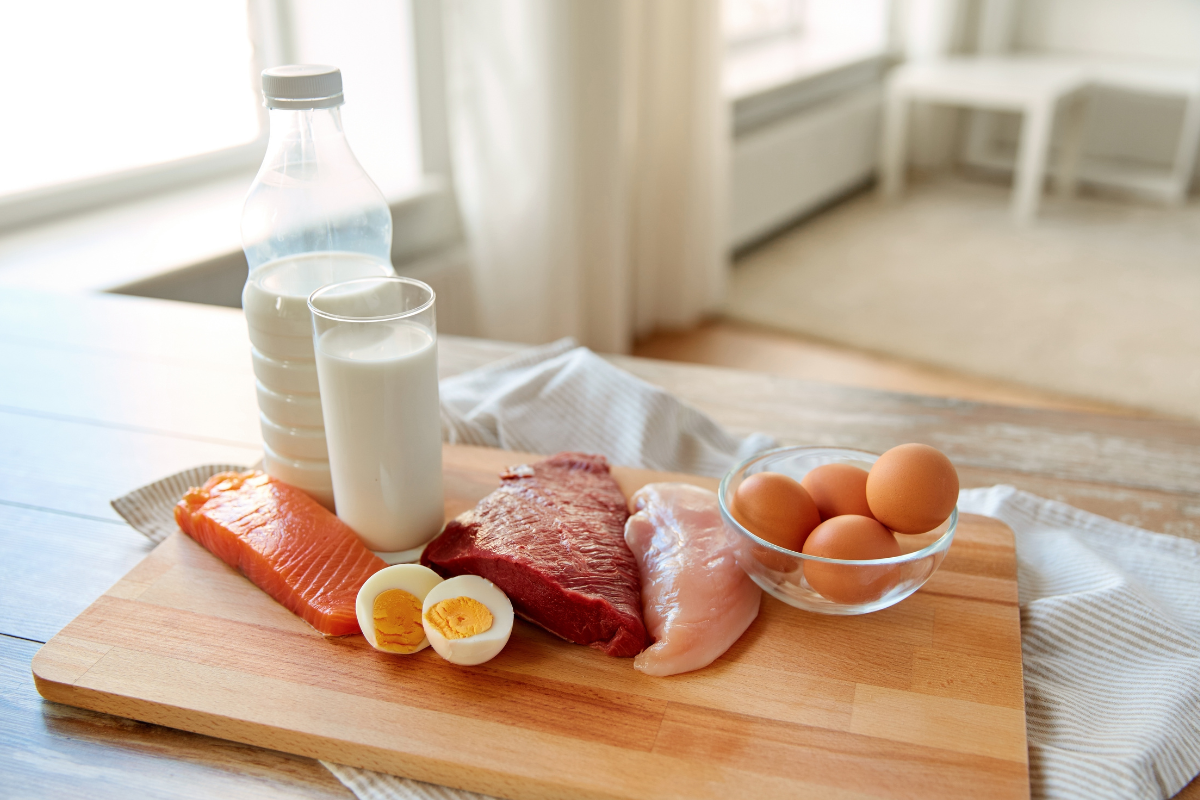
Protein can come from both animal and plant foods. Fish, eggs, poultry, meat, milk and yogurt are familiar animal sources. Beans, lentils, chickpeas, soy foods such as tofu and tempeh, nuts and seeds can contribute substantial plant protein.
You do not have to rely exclusively on one type. WHO recommends dietary diversity and notes that protein can come from a mixture of animal and plant sources.
The overall food matters as much as the protein number. For example, fish can provide protein together with beneficial unsaturated fats, while beans and lentils provide protein alongside dietary fibre. Nuts and seeds provide protein as well as unsaturated fats and micronutrients.
Choosing a variety of sources can therefore support a broader range of nutritional needs than repeatedly relying on one protein food.
Try rotating your protein sources during the week — for example fish, eggs, chicken, tofu, tempeh, beans and lentils — instead of feeling that every meal must revolve around meat.
Does Protein Timing Matter?
For most people, total daily intake and overall diet quality are more useful starting points than obsessing over an exact protein-eating window.
Spreading protein-containing foods across meals can be a practical way to reach your daily needs. Breakfast might include eggs, yogurt, milk or soy foods; lunch could include fish, chicken, tofu or legumes; and dinner can provide another balanced serving.
People doing structured resistance training may pay more attention to protein distribution and meals around exercise, but the basics still matter: sufficient total protein, adequate energy and consistent training.
A protein shake consumed at the “perfect” time cannot compensate for an otherwise poor diet or inconsistent exercise routine.
Do You Need Protein Supplements?
Most healthy adults can obtain protein from ordinary food. Protein powders and ready-to-drink shakes are convenient rather than automatically necessary.
A supplement may be useful when food is inconvenient, appetite is limited or someone has higher requirements that are difficult to meet through meals. Athletes and people following carefully planned diets may also use them for convenience.
If you do buy a protein product, check the full nutrition label rather than only the grams of protein. Some products can contain considerable added sugar, sodium or calories, depending on the formulation.
Whole foods also provide nutrients that isolated protein powders may not provide, including fibre in plant foods and various vitamins, minerals and healthy fats depending on the source.
“High protein” does not automatically mean “healthy.” Evaluate the entire food or product, including its ingredients, added sugars, sodium, fats and how it fits into your overall diet.
Can You Eat Too Much Protein?
More protein is not automatically more beneficial. Once your nutritional and training needs are being met, continually increasing intake does not guarantee additional muscle or better health.
WHO notes that excessive protein intake can place a metabolic burden on the body, particularly the kidneys. This is especially relevant for people who already have kidney disease or other conditions requiring dietary management.
Very protein-heavy diets can also push other nutritious foods out of the diet. If every meal becomes dominated by meat, shakes and protein snacks, you may leave less room for vegetables, fruits, whole grains and legumes that provide fibre and important micronutrients.
The goal should therefore be adequate protein within a balanced and diverse diet, not the highest possible intake.
What Does a Balanced Protein Day Look Like?
You do not need to count every gram to build a sensible eating pattern. Include a source of protein at your main meals and vary those sources across the week.
A breakfast might combine eggs or yogurt with whole grains and fruit. Lunch could pair tofu, fish or chicken with rice or another grain plus vegetables. Dinner might include lentils, beans, tempeh, fish or lean meat alongside vegetables and a carbohydrate source.
Snacks can contribute too. Milk, yogurt, nuts, seeds or soy foods can add protein without turning every snack into a specialised sports product.
Portion sizes and total energy needs differ between people, so use these examples as a pattern rather than a fixed meal prescription.
Protein Is Important — But Balance Still Wins
Protein deserves its place in a healthy diet, but it should not overshadow everything else. WHO describes adequacy, balance, moderation and diversity as core principles of a healthy diet.
A varied eating pattern provides protein alongside carbohydrates, healthy fats, fibre, vitamins and minerals. The healthiest choice is therefore rarely to maximise one nutrient at the expense of the rest.
If you are generally healthy, start with balanced meals and a variety of protein sources. If you have specialised athletic goals, are pregnant, older, recovering from illness or managing a medical condition, individual professional guidance can help determine whether your needs are different.
Key Takeaways
- Protein provides amino acids used for muscle, tissues, enzymes, hormones and other body functions.
- WHO states that around 10–15% of daily energy from protein is generally sufficient for adults.
- A commonly used minimum reference for healthy adults is about 0.8 grams per kilogram of body weight per day.
- Protein requirements can increase with factors such as training, age and particular life or health circumstances.
- Both plant and animal foods can contribute protein to a healthy diet.
- Protein supplements can be convenient, but most healthy adults do not automatically need them.
- More protein is not always better, especially when it crowds out other nutritious foods.
- Adequacy, balance, moderation and dietary variety matter more than chasing the highest protein number.
Sources & References
- World Health Organization. Healthy diet. WHO
- World Health Organization and Food and Agriculture Organization. What are healthy diets? WHO / FAO
- Harvard T.H. Chan School of Public Health. Protein — The Nutrition Source. Harvard Nutrition Source
About KnowvaLife
KnowvaLife creates practical health and wellness content designed to make everyday health information easier to understand. Our content is educational and does not replace personalised advice from qualified healthcare professionals.