Why Is Everyone Doing Yoga? Here’s What It Can Actually Do to Your Body
Yoga is often associated with flexibility and relaxation, but growing research is examining a much wider range of potential benefits. In 2026, the World Health Organization highlighted yoga's role in healthy ageing — from strength and balance to stress management and emotional wellbeing.
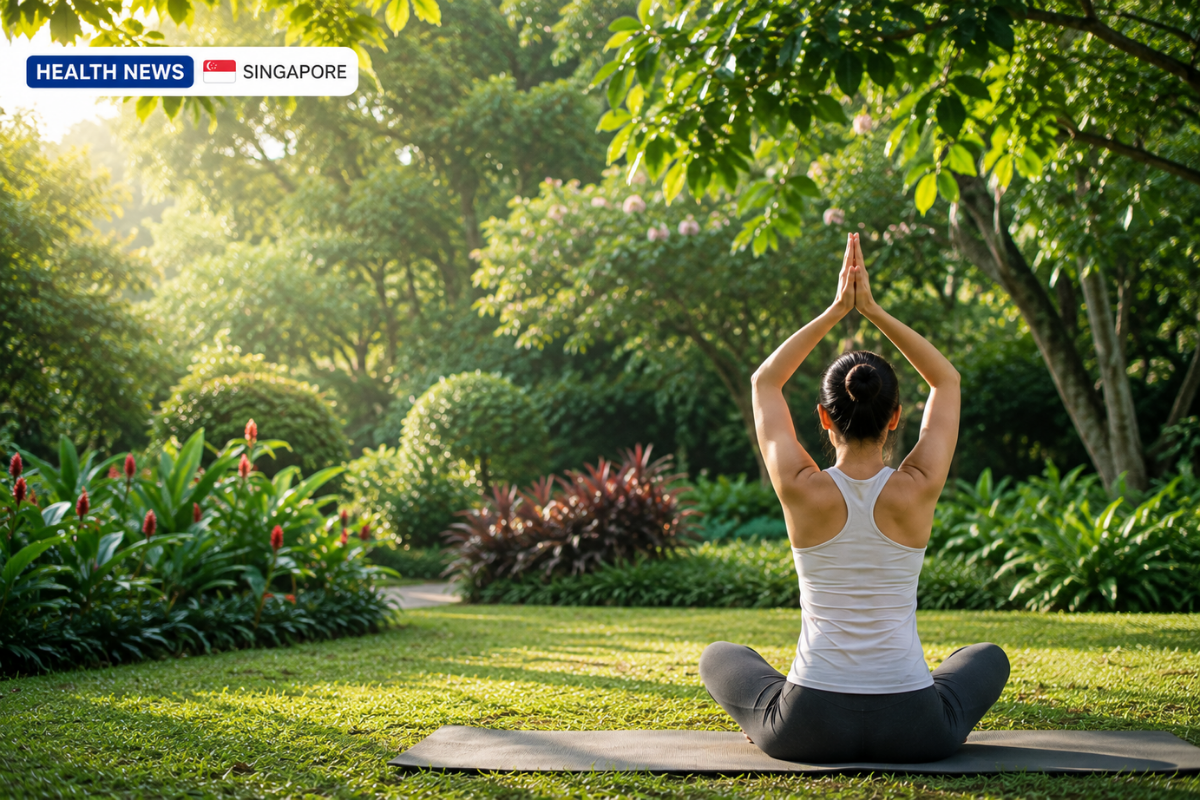
Illustrative image | AI-generated
This article provides general health and fitness information and is not a substitute for personalised medical advice. Yoga may not be suitable in the same way for everyone. People who are pregnant, recovering from injury or managing a medical condition should consider professional guidance before beginning or modifying an exercise programme.
HEALTH NEWS — Yoga has moved far beyond specialist studios and meditation retreats. Today, people practise it in parks, gyms, community spaces and at home — and researchers are increasingly examining what regular yoga may actually do for physical and mental health.
In June 2026, the World Health Organization highlighted yoga as part of the growing conversation around healthy ageing.
The theme of the 2026 International Day of Yoga was “Yoga for Healthy Ageing”, reflecting interest in how yoga may help people maintain movement, balance, strength, mobility and mental wellbeing as they grow older.
WHO noted that yoga combines physical movement, controlled breathing and mindfulness — three elements that may work together to support different aspects of health.
WHO's 2026 healthy-ageing focus highlighted growing scientific research into yoga, including its potential effects on strength, flexibility, stress, emotional wellbeing and cognitive health.
So Why Are So Many People Doing Yoga?
There is no single reason.
Some people begin yoga because they want to become more flexible. Others use it as a form of low-impact physical activity, while some are attracted to the breathing, relaxation or mindfulness aspects.
Unlike many workouts that focus primarily on cardiovascular fitness or muscle strength, yoga usually combines several elements at the same time.
- Physical postures and controlled movement
- Stretching and mobility
- Balance and coordination
- Controlled breathing
- Mindfulness and concentration
- Relaxation
That combination helps explain why people may use yoga for both physical fitness and mental wellbeing.
What Can Yoga Actually Do to Your Body?
Yoga poses move joints and muscles through different ranges of motion, which may gradually improve flexibility and mobility.
Holding and moving between poses requires muscles to support your body weight and maintain control.
Standing poses and controlled movements can challenge balance, coordination and body awareness.
Breathing, movement and mindfulness may help reduce perceived stress and promote relaxation.
WHO's 2026 commentary noted growing evidence for measurable benefits including improved strength and flexibility and reductions in stress and anxiety.
The U.S. National Center for Complementary and Integrative Health also says research suggests yoga may support general wellness, stress management, mental and emotional health, sleep and balance.
Depending on the style, yoga may challenge muscular strength, mobility, balance, coordination, breathing control and concentration at the same time.
Can Yoga Make You More Flexible?
Flexibility is one of the most recognised reasons people practise yoga.
Many yoga positions gently place muscles and joints through ranges of movement that may be greater than those used during normal daily activities.
Over time, regular practice may help improve flexibility and mobility.
However, improvement does not require forcing your body into difficult positions.
Flexibility varies greatly between individuals, and beginners should not judge progress by whether they can perform advanced poses.
Does Yoga Build Strength?
Yes, some forms of yoga can challenge muscular strength.
Holding positions such as planks, standing poses or controlled transitions requires muscles to stabilise and support the body.
More dynamic yoga styles can provide a greater muscular challenge than very gentle or restorative forms.
However, yoga should not automatically be considered a complete replacement for other forms of physical activity or resistance training.
Why Can Yoga Help With Balance?
Balance requires input from your muscles, joints, eyes and nervous system.
Yoga frequently asks the body to maintain controlled positions while shifting weight or changing posture.
That makes balance and coordination a natural part of many yoga sessions.
WHO has highlighted balance, flexibility, strength and mobility as particularly important abilities for maintaining independence as people age.
Maintaining enough strength, balance and mobility to stay active and independent is an important part of healthy ageing. This is one reason yoga attracted particular attention in WHO's 2026 campaign.
What Happens to Your Mind During Yoga?
Yoga differs from many conventional workouts because physical movement is often combined with controlled breathing and deliberate attention.
Instead of simply moving through exercises as quickly as possible, practitioners may be encouraged to notice breathing, posture and bodily sensations.
This mindfulness element may contribute to the sense of calm that many people associate with yoga.
Research reviewed by health organisations suggests yoga may have benefits for stress management and aspects of mental and emotional wellbeing.
Can Yoga Reduce Stress?
Research suggests it may help.
A review cited by NCCIH examined studies of yoga for stress management in healthy adults and found beneficial effects on perceived stress across the included studies.
That does not mean yoga eliminates stress or works equally well for everyone.
Instead, it can be viewed as one possible tool alongside adequate sleep, physical activity, social connection, relaxation techniques and professional mental-health support when necessary.
Can Yoga Help With Anxiety or Mood?
Research has also examined yoga in relation to anxiety and depression symptoms.
Some studies have reported improvements, but the evidence varies depending on the population, yoga programme and condition being studied.
For example, NCCIH notes that yoga may help with anxiety symptoms in some populations but that evidence is not strong enough to conclude that it is an effective treatment for diagnosed anxiety disorders.
Yoga should therefore not replace established psychological or medical treatment when someone has a mental-health condition.
Yoga may support wellbeing, but it should not be promoted as a cure for anxiety, depression, chronic disease or other medical conditions. People receiving treatment should not stop prescribed care because they begin practising yoga.
What About Sleep?
Yoga is also being studied for its potential effect on sleep.
Because some forms combine gentle movement, slow breathing and relaxation, regular practice may help some people wind down physically and mentally.
NCCIH includes sleep among the areas where studies have suggested possible wellness benefits.
However, persistent insomnia or major changes in sleep should still be discussed with a healthcare professional.
What Is New About the 2026 Research?
WHO's 2026 commentary did not claim that yoga had suddenly been proven to prevent ageing or cure disease.
Instead, it highlighted how scientific interest in yoga has grown.
Researchers are now examining not only familiar areas such as stress, strength and flexibility but also questions related to brain health and cognitive ageing.
WHO highlighted emerging evidence investigating whether yoga may help memory or cognitive function as people grow older.
These are promising areas, but they should not be interpreted as proof that yoga prevents dementia or cognitive decline.
“May support” and “has been studied for” are very different from saying yoga prevents or cures a disease. Good health information should make that distinction clear.
What Did Researchers Find in Cancer Survivors?
WHO also highlighted a large randomised study presented at the American Society of Clinical Oncology 2026 meeting.
The study examined a structured, gentle yoga programme among cancer survivors alongside standard survivorship care.
WHO reported improvements in mood, anxiety and fatigue among participants who took part in the yoga programme.
This does not mean yoga treats cancer.
Instead, it suggests that appropriately designed yoga programmes may potentially support certain aspects of wellbeing in some people living after cancer treatment.
Is Yoga Safe for Everyone?
Yoga is generally considered a safe form of physical activity for healthy people when performed appropriately.
However, injuries can occur.
According to NCCIH, the most commonly reported yoga injuries include strains and sprains.
Beginners can reduce risk by:
- Starting with beginner-friendly movements
- Avoiding painful or extreme positions
- Learning technique from a qualified instructor
- Using blocks, straps or other supports when appropriate
- Progressing gradually rather than copying advanced poses
- Telling an instructor about injuries or medical limitations
Who Should Take Extra Care?
Some people may need modifications or professional advice before starting yoga.
This may include:
- People recovering from an injury or surgery
- Pregnant women
- Older adults with mobility or balance limitations
- People with osteoporosis
- People with significant joint or spinal problems
- People with certain cardiovascular or medical conditions
The goal should be to adapt yoga to the individual rather than forcing the individual to match a pose.
Flexibility is something yoga may help develop. Beginners are not expected to perform advanced poses, and a suitable class should allow movements to be modified according to ability.
How Often Do You Need to Practise?
There is no single number of yoga sessions that guarantees a particular health benefit.
Research programmes vary widely in frequency, duration and yoga style.
For beginners, consistency is usually more practical than attempting long or difficult sessions immediately.
Even shorter sessions can help someone become familiar with breathing, basic movements and body awareness.
Which Type of Yoga Is Best?
There are many styles of yoga, and they can feel very different.
Some are slow and gentle, while others involve continuous movement or physically demanding sequences.
Common styles include:
- Hatha yoga — often slower and focused on individual postures.
- Vinyasa yoga — links movement and breathing through flowing sequences.
- Yin yoga — usually involves slower, longer-held positions.
- Restorative yoga — uses support and gentle positions to encourage relaxation.
The best style is generally one that matches your ability, goals and health needs and that you can practise safely and consistently.
Do You Need Expensive Equipment?
Not necessarily.
One reason yoga is accessible is that many basic practices require little more than comfortable clothing and enough safe floor space to move.
A yoga mat can provide cushioning and grip, while blocks and straps can make some positions easier to adapt.
WHO has described yoga as an adaptable physical activity that can be practised across different ages and abilities.
What Should Beginners Remember?
Yoga does not need to look impressive to be useful.
A beginner does not need to perform handstands, deep backbends or complicated poses.
Instead:
- Start with simple movements.
- Move within a comfortable range.
- Do not push through sharp pain.
- Breathe normally unless instructed otherwise.
- Focus on consistency rather than perfection.
- Choose an instructor who encourages modifications.
Extreme poses are not necessary to obtain the general movement, balance, breathing or relaxation benefits associated with yoga. Beginners should prioritise safe technique over how a pose looks.
So Is Yoga Worth Trying?
For many people, yes — particularly if they enjoy a form of movement that combines physical activity with controlled breathing and mindfulness.
Current research supports potential benefits in areas such as flexibility, strength, balance, stress management and general wellbeing.
At the same time, yoga is not a miracle treatment.
Different people will respond differently, and some health claims remain under investigation.
The strongest reason to practise may therefore be a simple one: it can provide an adaptable way to move your body, slow down and develop physical and mental awareness.
Yoga is much more than stretching, but it is not a cure-all. Evidence suggests it may support flexibility, strength, balance, stress management and general wellbeing when practised safely and regularly. The best yoga practice is one that suits your body, health and ability.
Key Takeaways
- WHO highlighted yoga as part of its 2026 focus on healthy ageing.
- Yoga combines physical movement, breathing and mindfulness.
- Research suggests yoga may support flexibility, strength, balance and mobility.
- Yoga may also help with stress management, emotional wellbeing and sleep.
- Researchers are investigating possible benefits for cognitive and brain health, but evidence is still developing.
- Yoga should not be presented as a cure for disease or a replacement for medical or psychological treatment.
- Beginners should start gradually and avoid forcing the body into painful or extreme positions.
- People with medical conditions, injuries or pregnancy may need modifications or professional guidance.
Sources & References
- World Health Organization. Yoga for healthy ageing: global practice and clinical evidence. Read WHO commentary
- World Health Organization. WHO celebrates the power of yoga for healthy ageing. Read WHO update
- World Health Organization South-East Asia. International Day of Yoga 2026. Read WHO South-East Asia statement
- National Center for Complementary and Integrative Health. Yoga: Effectiveness and Safety. Read evidence and safety guidance
About KnowvaLife
KnowvaLife uses timely health developments to help readers understand what they may mean for everyday wellbeing. We explain health information in clear language and use reliable sources to help readers make more informed health and lifestyle decisions.