Nepal Flood Survivors Face Growing Health Risks
Flood survivors in Nepal are facing new health concerns as damaged health facilities, disrupted roads, crowded temporary shelters and limited access to essential medicines affect communities recovering from the disaster.
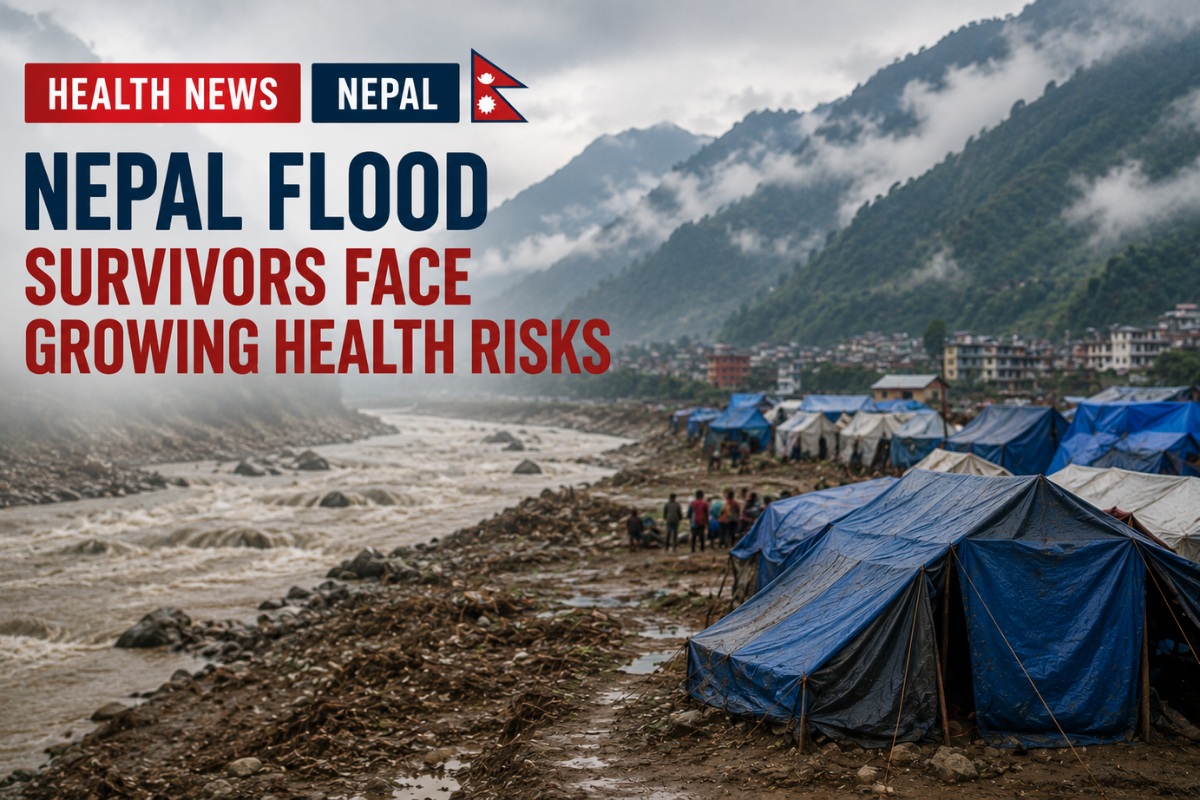
AI-generated illustration depicting communities affected by flooding in Nepal.
This article provides general health information and does not replace professional medical advice. People who are injured, unwell or experiencing serious symptoms after a flood should seek medical attention from local health services as soon as possible.
HEALTH NEWS — Communities affected by the severe floods in Nepal are now facing another challenge: protecting their health while roads, homes, water systems and healthcare services remain disrupted.
The floods struck parts of central Nepal on August 26, affecting communities along the Bhote Koshi and Trishuli river corridors.
Rasuwa, Nuwakot, Dhading and Chitwan districts in Bagmati Province, together with Gorkha and Tanahun districts in Gandaki Province, have been affected.
While rescue and recovery efforts continue, health authorities are increasingly focused on preventing illness among people who have been displaced or cut off from normal healthcare services.
Flood survivors are dealing with disrupted health services, damaged roads, crowded temporary shelters and shortages of some essential medicines. These conditions can increase the risk of illness after a major disaster.
Flooding Has Disrupted Health Services
Floodwater has damaged roads, bridges, homes and important public infrastructure across affected areas.
Health services have also been affected.
The World Health Organization reported that several health facilities were damaged and access to hospitals in some areas has become difficult because roads have been destroyed or blocked.
This can make it harder for people to receive treatment, refill medicines or obtain routine medical care.
Some health posts and healthcare facilities have been damaged or are operating under difficult conditions.
Damaged roads and bridges can make travelling to hospitals and clinics much harder.
Some displaced families may have difficulty obtaining regular medicines and other essential health supplies.
Crowded living conditions can increase the spread of some infectious diseases.
Why Health Risks Can Rise After Floods
The health impact of a flood does not end when the water begins to recede.
Flooding can damage drinking-water systems, toilets, food storage areas and healthcare infrastructure.
People may also be forced to live close together in temporary shelters.
Together, these conditions can create new public-health concerns.
Unsafe Water and Diarrhoeal Disease
One of the most important concerns after flooding is access to safe drinking water.
Floodwater may mix with sewage, waste, soil and other contaminants.
If contaminated water is used for drinking, preparing food or brushing teeth, it can increase the risk of diarrhoeal and other waterborne illnesses.
Water from rivers, streams, wells or other sources affected by flooding may be contaminated even when it looks clear. Follow local health guidance and use boiled, treated or verified safe water whenever possible.
Food Safety Can Become More Difficult
Flooding and power disruptions may make it harder to store food safely.
Food that has come into direct contact with floodwater should not be eaten.
People living in temporary shelters should also be careful with food that has been stored for long periods without proper refrigeration.
- Use safe water when preparing meals.
- Eat freshly cooked food where possible.
- Keep food covered and protected from insects.
- Avoid food that smells unusual or appears spoiled.
- Do not eat food contaminated by floodwater.
Crowded Shelters Can Increase Infection Risk
When many people are staying together in temporary shelters, infections can spread more easily.
Limited access to toilets, washing facilities and clean water can make infection prevention more difficult.
Respiratory illnesses may also spread more easily when people are living close together, particularly in poorly ventilated or damp conditions.
Regular handwashing with soap, safe food preparation, clean toilets and proper waste disposal are especially important in crowded temporary living areas.
Respiratory Illness Is Another Concern
WHO has identified respiratory illness as one of the health risks that may increase following the Nepal floods.
Crowded shelters, damp clothing, colder conditions and close contact between displaced families can contribute to respiratory infections.
People should watch for symptoms such as:
- Persistent coughing
- Fever
- Difficulty breathing
- Wheezing
- Chest discomfort
- Unusual weakness or fatigue
Standing Water Can Attract Mosquitoes
Pools of stagnant water left behind after flooding can become breeding sites for mosquitoes.
WHO has identified vector-borne diseases as another health concern following the disaster.
Where practical, communities should remove containers or objects that collect stagnant water and follow advice from local public-health authorities.
Injuries Can Happen During Cleanup
Flood-affected areas may contain broken glass, sharp metal, damaged buildings, unstable ground and electrical hazards.
People cleaning homes or moving through damaged areas should wear suitable footwear and protective clothing when available.
Cuts and wounds should be cleaned promptly with safe water.
Deep wounds, heavily contaminated wounds, uncontrolled bleeding or injuries showing signs of infection should be assessed by a healthcare professional.
People With Existing Health Conditions Need Continued Care
Floods can interrupt routine treatment for people living with chronic health conditions.
This may include people who regularly take medicines for conditions such as diabetes, high blood pressure, heart disease, asthma or epilepsy.
People should try to keep their medicines dry and safely stored.
If medication has been lost, contaminated or is running out, seek help from the nearest operating health facility or relief health team.
Mental Health Is Part of the Emergency
Surviving a major flood can be deeply distressing.
Some people have lost relatives, homes, livelihoods and personal belongings in a very short period.
The uncertainty surrounding missing family members and the difficulty of living in temporary shelters can add further emotional strain.
WHO has identified mental health and psychosocial support as an important part of the health response.
People may experience fear, worry or difficulty relaxing after a traumatic event.
Stress, noise and unfamiliar shelter environments can make sleeping difficult.
Losing relatives, homes or livelihoods can have a significant emotional impact.
Staying connected with trusted people and accessing available psychosocial support can help.
How Is WHO Supporting Nepal?
The World Health Organization is working with Nepal's health authorities and other partners to support the emergency response.
WHO announced US$150,000 in emergency funding from the South-East Asia Regional Health Emergency Fund.
Emergency medical supplies have also been deployed.
These include an Interagency Emergency Health Kit designed to support the basic health needs of nearly 10,000 people for three months.
WHO has also provided multipurpose tents, surgical masks, gloves, hand sanitizers and other medical supplies.
Health authorities are monitoring for emerging public-health risks so that outbreaks or other health problems can be identified and addressed as quickly as possible.
Simple Steps to Protect Your Health
People living in or returning to flood-affected areas can take several practical steps to reduce health risks.
Use boiled, treated or verified safe water for drinking, cooking and brushing teeth.
Wash hands regularly with soap, especially before eating and after using the toilet.
Choose freshly cooked food and avoid anything contaminated by floodwater.
Seek medical advice if fever, vomiting, diarrhoea, breathing problems or other concerning symptoms develop.
When Should You Seek Medical Help?
People should seek medical attention if they develop symptoms that are serious, persistent or getting worse.
These may include:
- Persistent diarrhoea
- Repeated vomiting
- High or continuing fever
- Difficulty breathing
- Severe weakness or dehydration
- Deep or infected wounds
- Severe abdominal pain
- Confusion or fainting
Difficulty breathing, severe dehydration, loss of consciousness, serious injuries or rapidly worsening illness should be treated as medical emergencies.
Protecting Children After Floods
Children may be particularly vulnerable after natural disasters because they can become dehydrated more quickly and may be exposed to contaminated water while playing.
Parents and caregivers should make sure children have access to safe drinking water, clean food and proper handwashing facilities.
Children should also be kept away from floodwater, unstable structures and debris wherever possible.
Older Adults May Need Extra Support
Older adults may have difficulty walking through damaged areas or reaching healthcare facilities.
They may also rely on regular medicines for chronic conditions.
Family members and neighbours can help by checking that older adults have access to medication, safe drinking water, food and medical care when needed.
What Should Flood-Affected Families Do Now?
Health risks after floods can change quickly.
Families should continue following official instructions from Nepal's health and disaster-response authorities.
- Use safe drinking water.
- Wash hands regularly with soap.
- Keep food clean and properly stored.
- Avoid unnecessary contact with floodwater.
- Keep wounds clean and covered.
- Remove stagnant water around living areas where possible.
- Keep important medicines safe and dry.
- Seek medical care when symptoms become concerning.
- Pay attention to mental health and emotional wellbeing.
- Follow updates from official health authorities.
Nepal's flood emergency is not only a rescue and rebuilding challenge. Disrupted healthcare, unsafe water, crowded shelters and difficult living conditions can create additional health risks. Safe water, good hygiene, early medical care and continued disease monitoring are important during the recovery period.
Key Takeaways
- Severe flooding has affected several districts in central Nepal.
- Health facilities and roads have been damaged, making access to healthcare more difficult in some areas.
- Crowded shelters and damaged water and sanitation systems can increase the risk of illness.
- Health concerns include diarrhoeal disease, respiratory illness, unsafe water and food, injuries and vector-borne diseases.
- People with chronic health conditions should try to maintain access to their usual medicines.
- Mental health and psychosocial support are important for people dealing with loss, displacement and uncertainty.
- WHO has deployed emergency medical supplies and funding to support Nepal's health response.
- Safe water, handwashing, food safety and early medical attention can help reduce health risks.
Sources & References
- World Health Organization Nepal. Nepal: Flash Floods and Health Response. Updated August 2026.
- World Health Organization Nepal. WHO Releases US$150,000 Emergency Funds to Support Nepal's Flood Response. Published August 30, 2026.
- World Health Organization Nepal. WHO Nepal Statement on Rasuwa Floods. Published August 26, 2026.
- The Kathmandu Post. Bhotekoshi Flood Survivors Face New Battle Against Illness. Published August 31, 2026.
About KnowvaLife
KnowvaLife explains health news and everyday health topics in simple, easy-to-understand language. We use reliable health sources to help readers understand important developments and make more informed health decisions.